
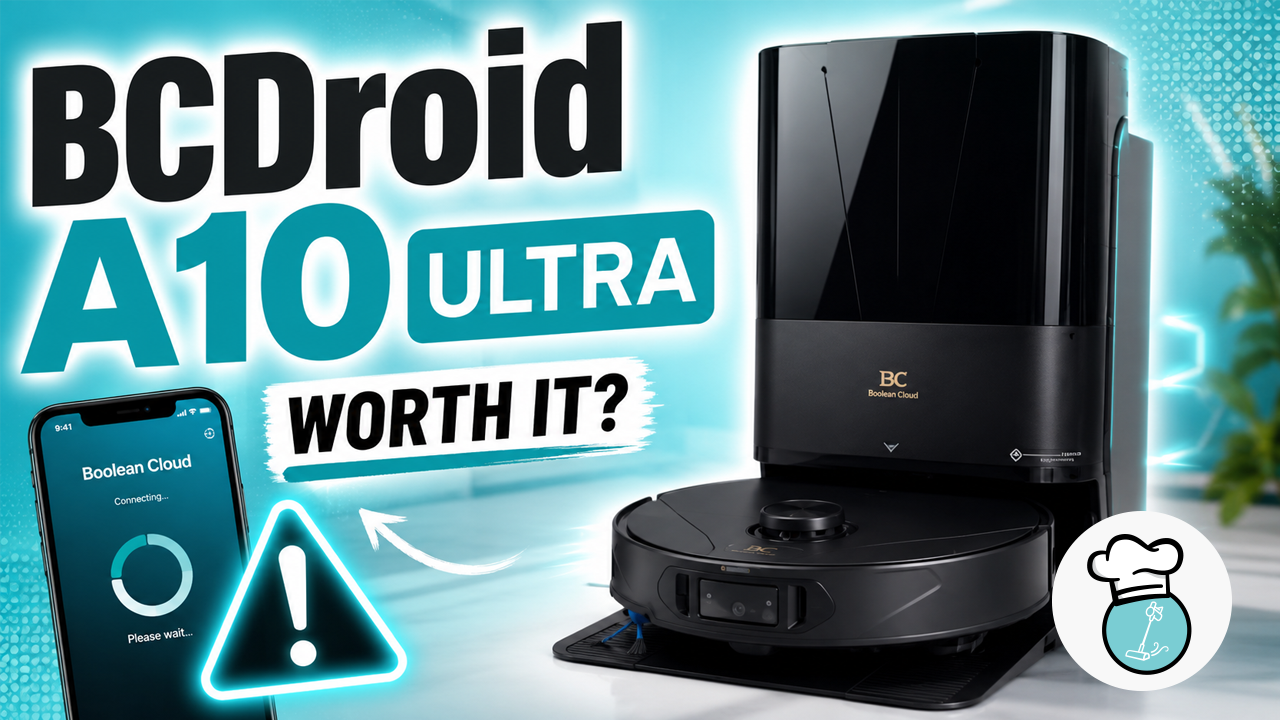
The BCDroid A10 Ultra arrived with an impressive specification sheet and nearly every premium feature you’d expect from a flagship robot vacuum. On paper, it looks like a serious competitor in the high-end market. In practice, however, our experience was far more complicated.
Bcdroid A10 Ultra Robot Vacuum and Mop, 25,000Pa Suction, Triple Lift System, Self-Emptying, Self-Refilling, All-in-One Self-Cleaning Station, AI Obstacle Avoidance
- All-in-one auto-emptying dock
- Effective dual rotary mopping
- Strong obstacle avoidance
- Smart navigation & AI Cam
- Built-in odor control
- Complete smart cleaning features
- Buggy app and firmware
- Buggy app and firmware
- Poor debris pickup
- Unreliable remote controls
- Setup issues
- No automatic mop pad removal

In fact, this review almost never made it to publication. After testing more than 145 robot vacuums, the A10 Ultra delivered one of the roughest first impressions we’ve encountered. The biggest issue wasn’t the hardware itself—it was the software. From frustrating firmware updates to app reliability problems, simply getting the robot fully operational took far longer than it should have.
Despite that rocky start, we completed our full testing process to see whether the A10 Ultra could redeem itself once everything was finally working.
Design and Setup
The A10 Ultra closely resembles previous robot vacuums produced by 3i, which isn’t surprising given the apparent relationship between BCDroid and 3i, both of which trace back to Picea Corporation, the company that acquired iRobot. The overall design, dock, and hardware all feel familiar, with only subtle cosmetic differences such as blue accents replacing the purple highlights we’ve seen on earlier models.
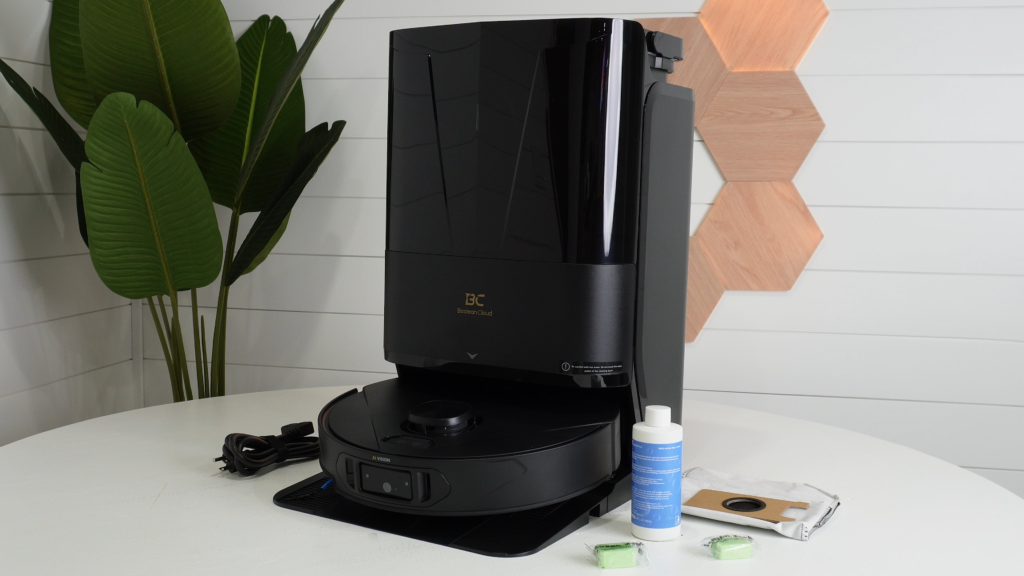
Inside the box, BCDroid includes everything needed to get started, including the robot, a multifunction cleaning station, cleaning solution, deodorizing modules, a spare dust bag, and pre-installed mop pads. Initial setup is fairly straightforward: assemble the dock, fill the clean water tank, install the deodorizer, allow the robot to charge, and connect it through the companion app.
Unfortunately, that’s where our smooth experience ended.
A Software Experience That Needs Significant Improvement
The software was easily the biggest weakness of the A10 Ultra.
From the very beginning, we encountered one issue after another. Firmware updates were painfully slow, often appearing to stall without any indication of progress. It ultimately took several days before we successfully completed all of the required updates because we repeatedly abandoned the process, unsure whether anything was actually happening.
If you purchase the A10 Ultra, our best advice is simple: start the firmware update and leave it alone. Resist the temptation to continually check the app or interact with the robot. Walk away for a few hours and let it finish on its own.
Even after the updates, the companion app continued to feel sluggish. We frequently had to force close and reopen it just to refresh information correctly. While multiple app updates during our testing noticeably improved stability, the overall experience still feels unfinished compared to competing brands.
We also encountered several functionality issues that shouldn’t occur on a premium robot vacuum. The remote driving controls never worked properly during our testing, live video monitoring was extremely limited, and the robot initially refused to mop despite having mopping enabled. The mop pads simply wouldn’t rotate until we performed a complete factory reset and started the setup process over from scratch.
That difficult setup experience undeniably influenced our first impression. We rarely experience this many problems with a brand-new robot vacuum, and the A10 Ultra set an unfortunate record as one of the most frustrating products we’ve tested.
Hardware Shows Promise, But Cleaning Performance Doesn’t
Once everything was finally working, we shifted our focus to cleaning performance. On paper, the A10 Ultra appears exceptionally powerful, boasting 25,000 Pa of advertised suction, placing it firmly in flagship territory.
However, our laboratory testing tells a different story.
Despite the impressive specifications, the robot produced just 311 FPM of carpet airflow, well below our category average of 425 FPM. Maximum in-use pressure also measured only 21 kPa, compared to the category average of 36 kPa. These results serve as another reminder that advertised suction numbers rarely tell the complete story. Airflow, brush design, pressure, and overall engineering ultimately determine how well a robot cleans.
Unfortunately, those shortcomings became obvious during our pickup testing.
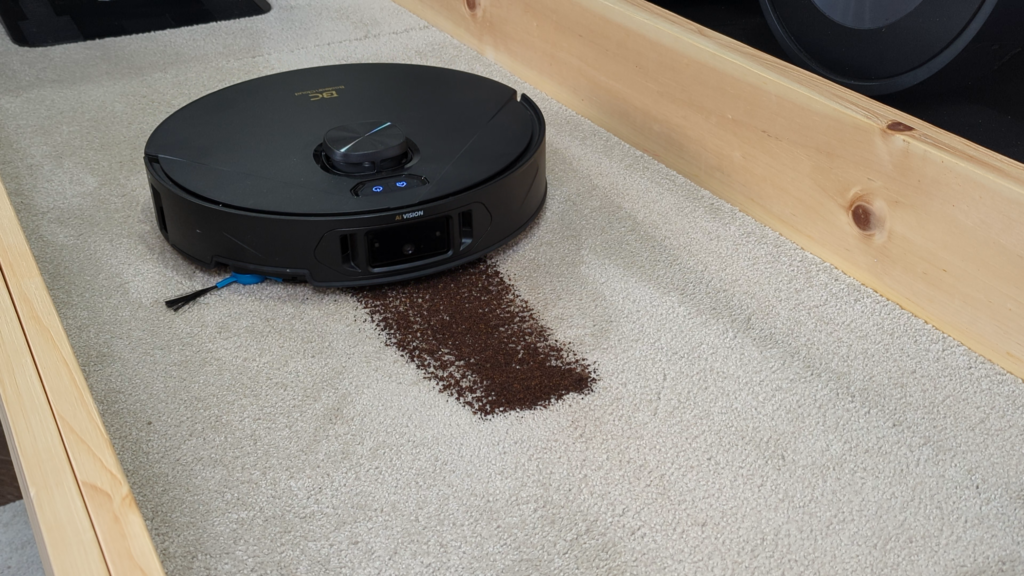
The A10 Ultra struggled across every debris category we evaluate. It scored 65% on coffee grounds, 10% on sand, and 45% on cat litter, all well below our category averages. These were among the weakest pickup results we’ve recorded in recent testing, particularly considering the robot’s premium positioning.
Mopping and Dock Performance
While vacuuming left much to be desired, mopping performed considerably better.
The dual spinning mop pads apply consistent downward pressure and cleaned effectively once the earlier software issues were resolved. The multifunction dock also delivers many of the premium conveniences buyers expect, automatically washing the mop pads, drying them with hot air, and emptying the onboard dustbin after each cleaning session.
The robot includes a standard 10.5 mm mop lift along with mop extension and side brush extension to improve edge cleaning. However, unlike several competing flagship models, the A10 Ultra cannot automatically remove or reattach its mop pads when transitioning onto carpet.
One feature we particularly appreciated was the removable base tray, which makes cleaning the docking station much easier over time. The included deodorizing module also proved surprisingly effective, noticeably reducing the unpleasant odor that often develops inside dirty water tanks.
Obstacle Avoidance and Battery Life
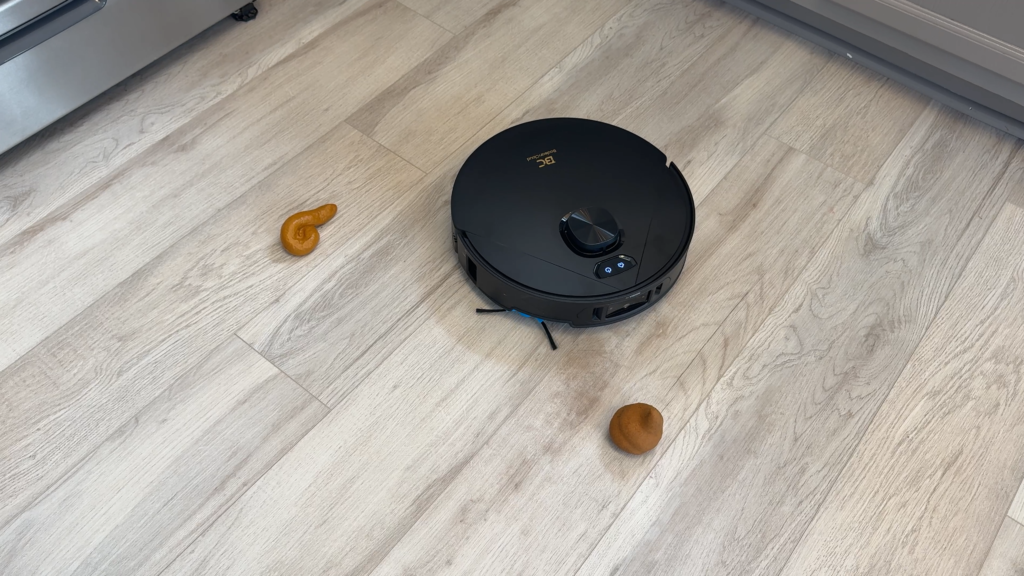
Obstacle avoidance was one of the brighter aspects of the A10 Ultra. It achieved a 71% obstacle avoidance score, outperforming our category average of 65%. While cables continued to present occasional problems, the robot generally navigated household obstacles with confidence.
Battery performance also looked strong on paper, with BCDroid claiming up to 210 minutes of runtime. Rather than measuring runtime alone, we evaluate how much floor area a robot can actually clean on a single charge.
On hard floors using the lowest suction setting, the A10 Ultra covered approximately 2,153 square feet, which is surprisingly well below our category average. Under maximum suction on carpet, it managed roughly 1,076 square feet, outperforming the average in that specific scenario. However, because cleaning performance was so underwhelming, the additional efficiency didn’t translate into better real-world results.
The Companion App Still Lags Behind the Competition
The BCDroid companion app offers the standard collection of features, including multi-floor mapping, customizable vacuum and mopping settings, no-go zones, and limited live video monitoring.
The problem isn’t a lack of features—it’s the execution.
Throughout our testing, the app remained noticeably slower and less polished than competing ecosystems. After using virtually every major robot vacuum platform, we continue to find Dreame offers the strongest software experience, with Roborock close behind. By comparison, the BCDroid app still feels like a work in progress.
Final Verdict
The BCDroid A10 Ultra is a robot vacuum that checks nearly every box on a specification sheet. It offers automatic mop washing, hot air drying, self-emptying, mop lifting, edge cleaning extensions, obstacle avoidance, and an attractive-looking dock. On paper, it’s exactly what many shoppers are looking for.
Unfortunately, specifications don’t always translate into real-world performance.
Our testing revealed consistently below-average vacuuming performance, particularly on carpets, while the software experience proved to be one of the least refined we’ve encountered. Although updates improved some of the early issues, the app still requires significant work before it can compete with more established brands.
The hardware itself shows promise, and many of these software frustrations could be addressed through future updates. However, in its current state, there are simply too many compromises to justify the asking price.
If you’re shopping in this price range today, competing models from Dreame, MOVA, and Roborock currently offer stronger cleaning performance, more polished software, and a better overall ownership experience. Until BCDroid significantly improves both its software and real-world cleaning performance, it’s difficult to recommend the A10 Ultra over its established competitors.
Bcdroid A10 Ultra Robot Vacuum and Mop, 25,000Pa Suction, Triple Lift System, Self-Emptying, Self-Refilling, All-in-One Self-Cleaning Station, AI Obstacle Avoidance
- All-in-one auto-emptying dock
- Effective dual rotary mopping
- Strong obstacle avoidance
- Smart navigation & AI Cam
- Built-in odor control
- Complete smart cleaning features
- Buggy app and firmware
- Buggy app and firmware
- Poor debris pickup
- Unreliable remote controls
- Setup issues
- No automatic mop pad removal