
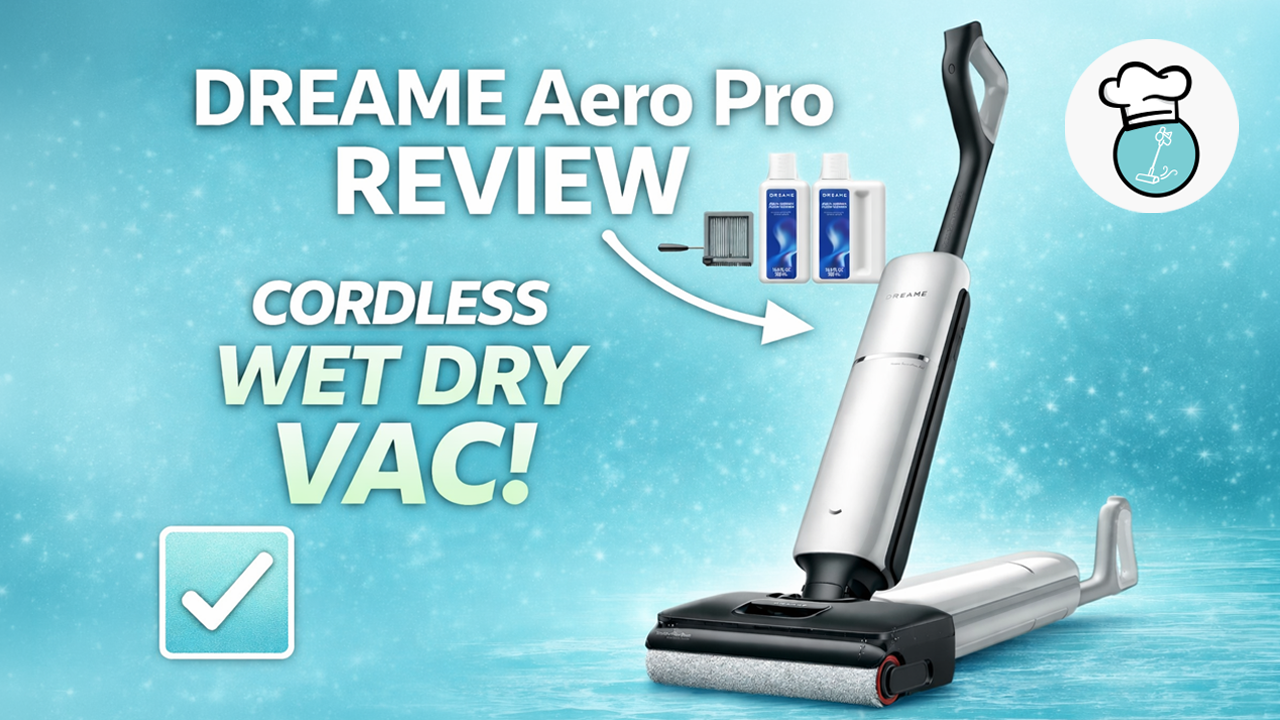
Today we’re taking a closer look at the Dreame Aero Pro cordless wet dry vacuum cleaner. This marks our ninth wet dry vacuum from Dreame and our 37th overall in this category. Dreame provided the sample for review, but this is not a sponsored post and, as always, all opinions are our own. If you’re interested in picking one up, you can find the purchase link in the description, along with a link to our daily vacuum deal site.
DREAME Aero Pro Wet Dry Vacuum Mop, Ultra-Slim with Hot Self-Cleaning/Self-Drying, 0 Hair Tangle Great for Pet Owner, Powerful Wet Dry Vacuum with 60min Runtime, Pick-up & Mop at The Same Time

Unboxing and Setup
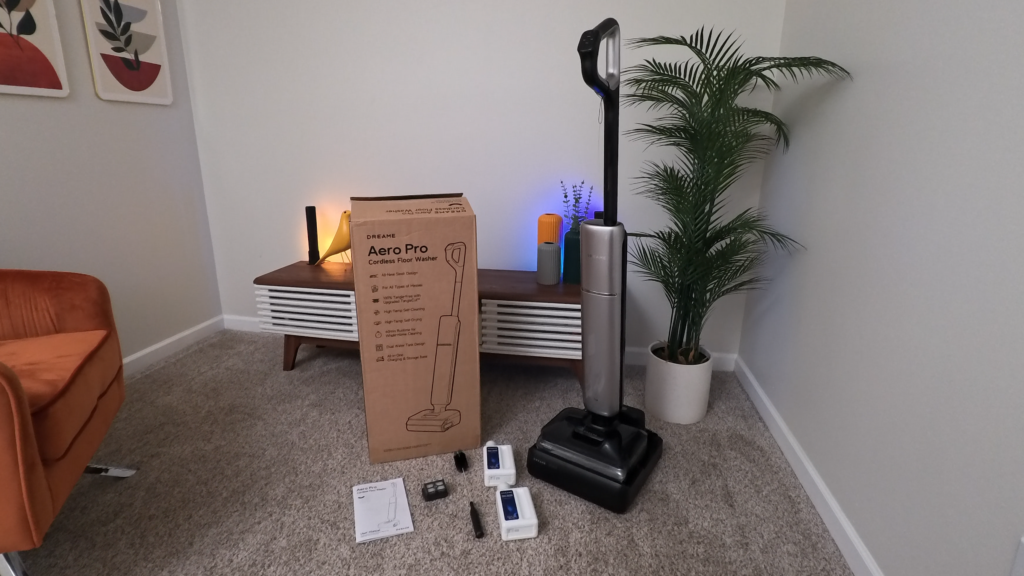
Inside the box, Dreame includes the main unit, a snap-in handle, charging base, extra washable filter, cleaning brush, two bottles of cleaning solution, and the product literature. Setup is refreshingly simple. After snapping the handle into place, you’ll want to fully charge the unit, add a capful of cleaning solution, and fill the clean water tank. From there, it’s ready to go.
Real-World Performance
At MSRP, the Dreame Aero Pro sits right at the average price point for the wet dry category. The big question is whether its performance justifies that positioning compared to the 35+ other models we’ve tested.
On paper, suction is rated at 25,000 Pascals, which is the highest rating we’ve seen so far. It ties the Roborock F25 ACE Pro and exceeds the 19,000 Pascal category average. For context, the Tineco S9 Master comes in at 23,000 Pascals.
In our studio, we measure in-use airflow and pressure to get a more realistic view of cleaning performance. The Aero Pro delivered above-average airflow, peaking at 431 feet per minute compared to the 413 FPM category average. While that’s strong, it still falls short of the F25 ACE Pro’s 562 FPM, despite both units sharing the same advertised suction rating.
Interestingly, in-use pressure measured below average at 0.72 kPa versus the 1.28 kPa category average. We’ve seen similar results with the F25 ACE Pro, which suggests that manufacturer suction claims don’t always translate directly into higher real-world pressure numbers. It’s something we continue to monitor as we test more models.
Runtime, Noise, and Tank Capacity
Runtime is one of the Aero Pro’s strongest advantages. It’s rated for up to 60 minutes, well above the 42-minute category average. As always, that 60-minute figure reflects ideal lab conditions in suction-only mode. In everyday use, especially in higher power settings, you can expect closer to 40 minutes in Smart mode, around 35 minutes in Turbo, and roughly 40 minutes in Quiet mode. Even so, that’s still competitive and practical for most homes.
Noise levels peak at 81 dB. While that’s slightly above average for this category, it remains quieter than many traditional cordless vacuums.
The clean water tank holds 1,000 milliliters, while the dirty water tank holds 600 milliliters. In practice, we found the dirty tank fills up fairly quickly during larger cleaning sessions. A bit more capacity there would reduce the need for frequent emptying, which is always appreciated.
Design and Maneuverability
One of the more impressive aspects of the Aero Pro is its design. Because the clean water tank sits over the brush head rather than in the handle, the weight feels balanced and manageable. This configuration often makes units too tall to fit under standard kitchen cabinet toe kicks, but surprisingly, the Aero Pro slid underneath ours with room to spare. That’s a welcome improvement over some similar designs from Tineco and Roborock that tend to come up just short.
The true 180° lay-flat capability is a standout feature, allowing the unit to reach well under low furniture. Dreame also added a small support wheel midway up the body to assist when the vacuum is fully reclined. We do wish the wheel were positioned slightly higher instead of relying partly on a rubber contact point, as this creates a bit more friction when completely flat. Still, it’s a minor issue in an otherwise well-executed design.
Dual-edge cleaning helps with baseboards and corners, and the anti-tangle comb design does an excellent job managing long hair and pet hair. In our particularly hair-heavy household, it has performed extremely well, preventing the kind of wrap-around tangles that can plague other models.
Self-Cleaning System
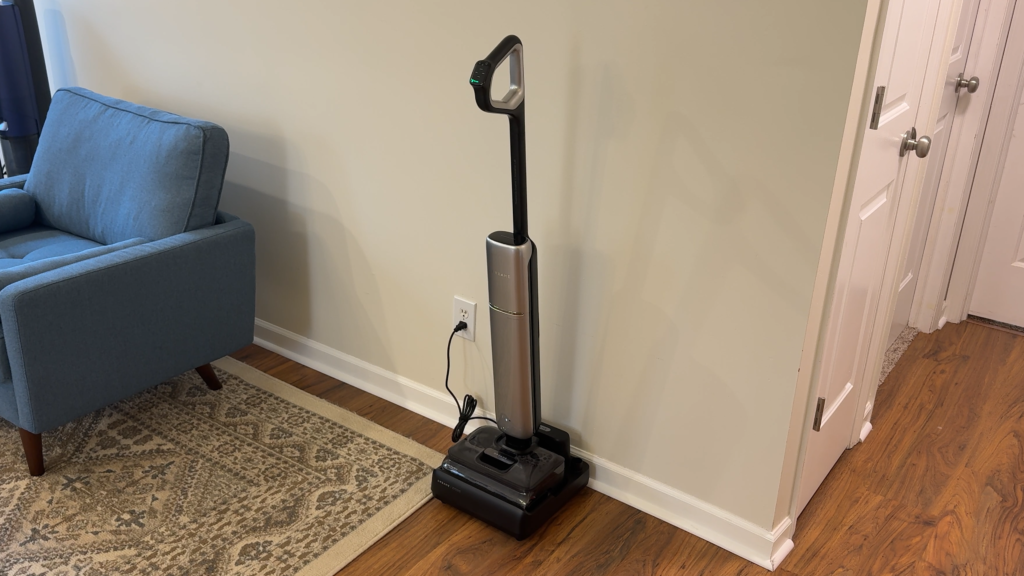
After each cleaning session, the Aero Pro runs an automated self-cleaning cycle using hot water between 100 and 104 degrees Fahrenheit, followed by 203-degree hot air drying. The drying cycle takes just five minutes and consistently leaves the brush roll dry and odor-free. It’s one of the more efficient and convenient self-cleaning systems we’ve tested.
Docking is simple—just lift and place the unit onto its charging base. After using the push-and-dock system on the Mova X4 Pro, we do find ourselves wishing more brands would adopt that style for even easier placement.
Feature Trade-Offs
While performance and runtime are strong, there are a few omissions that stand out at this price level. The display does not show the exact battery percentage, which can be frustrating when you’re trying to plan a full cleaning session. There’s also no spray trigger and no heated floor washing options such as hot water spray or steam.
For comparison, the Mova X4 Pro comes in at a lower price point and includes hot water spray. That makes the Aero Pro’s lack of heated cleaning features feel like a missed opportunity. Additionally, the absence of an LED headlight is puzzling. At this price tier, integrated lighting is increasingly expected and can noticeably improve the overall cleaning experience.
Final Thoughts
The Dreame Aero Pro delivers strong suction claims, above-average airflow, excellent runtime, and a highly effective self-cleaning system. It’s thoughtfully engineered, handles hair exceptionally well, and—importantly—actually fits under low cabinets, which isn’t something every competitor can claim.
However, at its current price, the lack of an LED headlight, battery percentage display, and spray or heated cleaning features may give some buyers pause. If raw performance, runtime, and fast hot air drying are your top priorities, the Dreame Aero Pro is a very strong contender. If you’re more focused on feature-rich design, it’s worth comparing it closely against similarly priced alternatives before making your final decision.
DREAME Aero Pro Wet Dry Vacuum Mop, Ultra-Slim with Hot Self-Cleaning/Self-Drying, 0 Hair Tangle Great for Pet Owner, Powerful Wet Dry Vacuum with 60min Runtime, Pick-up & Mop at The Same Time
Leave feedback about this