


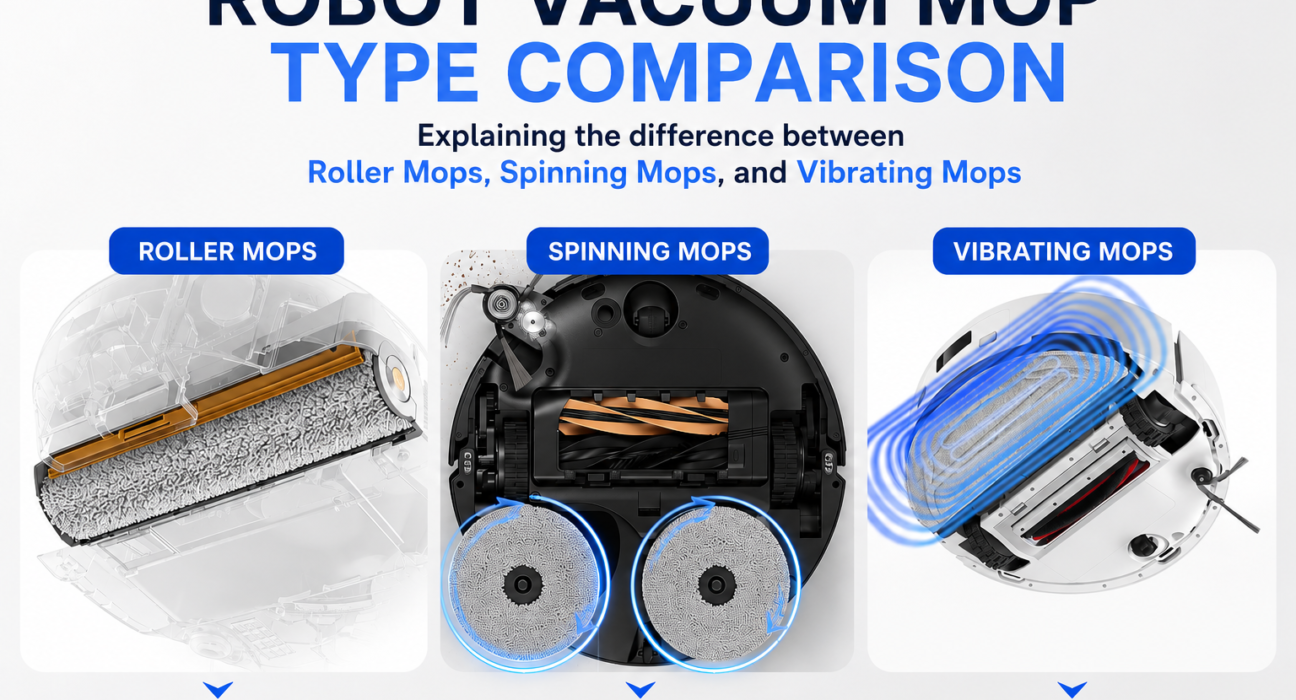
Choosing a robot vacuum with a mopping function isn’t as simple as picking the model with the highest suction power. One of the biggest differences between today’s robot vacuum cleaners is how they mop. While many robots can vacuum and mop in a single cleaning session, the type of mopping system they use has a significant impact on cleaning performance.
The three most common mopping technologies are roller mops, spinning mops, and vibrating mops. Each has been designed with different cleaning priorities in mind, making them better suited for certain homes, floor types, and messes. Understanding how each system works can help you choose the right robot vacuum for your everyday cleaning needs.
Roller Mops
Roller mops use a cylindrical roller that rotates continuously as the robot moves across the floor. Unlike a traditional flat mop, the roller is constantly scrubbing while remaining damp, allowing it to lift wet messes more effectively. On many modern systems, the roller is also rinsed with fresh water throughout the cleaning process while dirty water is collected separately. This means the robot is cleaning with cleaner water instead of repeatedly dragging the same dirty mop across your floors.

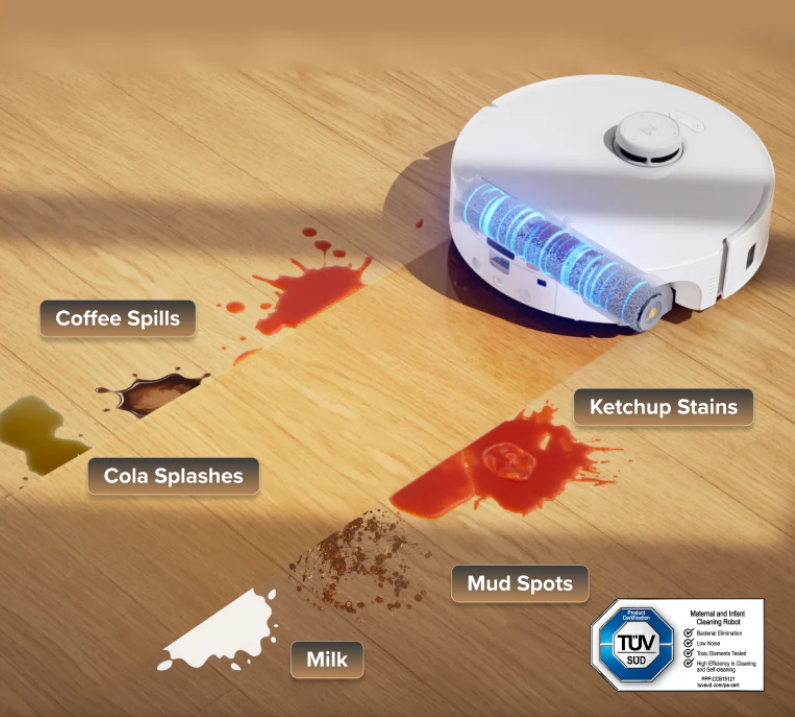
This style of mopping excels when dealing with fresh spills and sticky messes that are common in kitchens and dining areas. Spilled milk, coffee, soft drinks, sauces, and other liquid accidents are often removed more effectively because the roller applies continuous pressure while actively scrubbing the floor.
Another advantage of roller mops is their ability to maintain consistent contact with the floor throughout the cleaning cycle. Rather than simply wiping the surface, the rolling action helps lift grime while reducing streaks and water residue. For households with children or pets where spills are a regular occurrence, roller mops can provide one of the most effective wet-cleaning experiences available in a robot vacuum.
Spinning Mops
Spinning mops have become one of the most popular mopping systems in robot vacuums, largely because they offer an excellent balance between cleaning performance and versatility. These systems typically use one or two circular mop pads that rotate against the floor, creating friction that helps loosen dirt while polishing the surface as the robot moves.

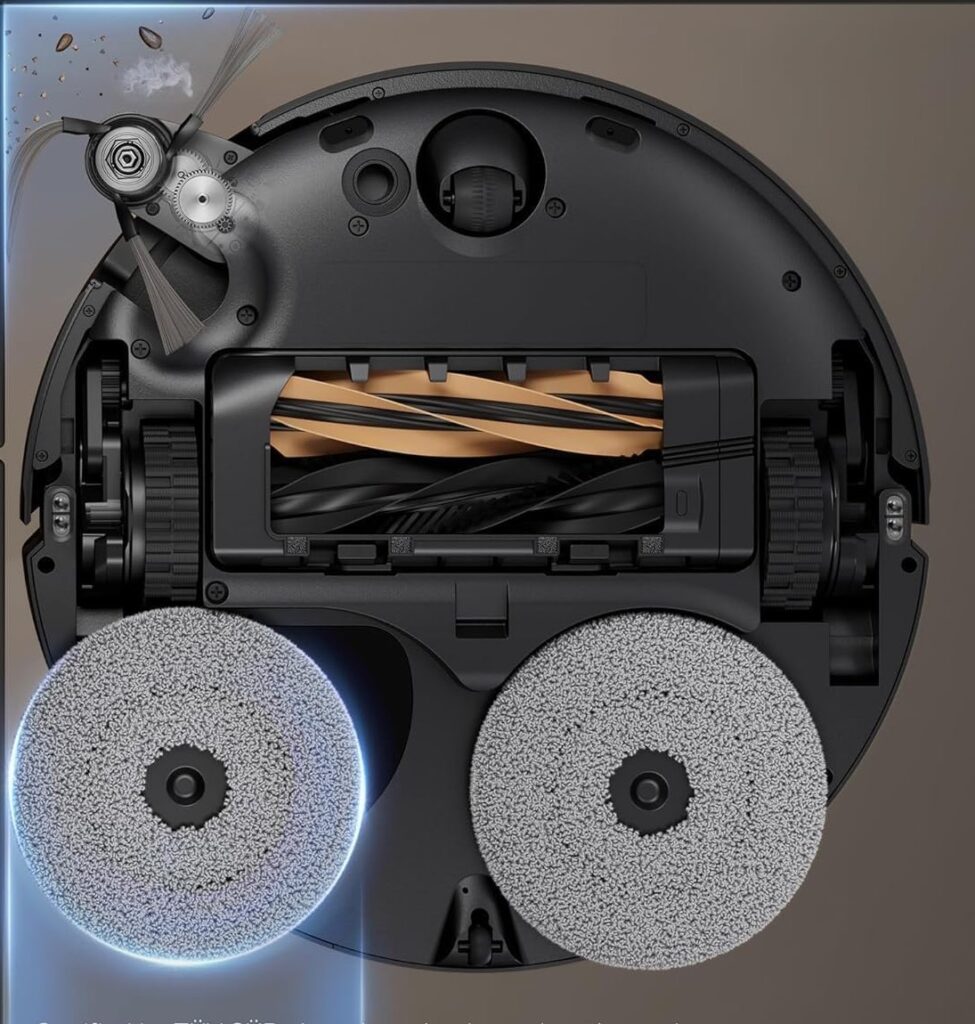
The rotating motion makes spinning mops particularly effective for everyday cleaning. They perform well on dried footprints, dust, mud, and general household grime, while also reaching close to edges and around furniture depending on the robot’s design. Their broad floor coverage also makes them well suited for larger homes where routine maintenance cleaning is a priority.
Many premium robot vacuums pair spinning mop systems with self-cleaning docking stations that automatically wash and dry the mop pads after each cleaning session. This reduces maintenance for the owner while helping keep the mop pads cleaner for future use.
Although spinning mops can handle a wide range of household messes, stubborn sticky spills that have dried onto the floor may occasionally require multiple cleaning passes. Even so, they remain one of the most versatile options for homes that need consistent day-to-day floor cleaning.
Vibrating Mops
Vibrating mops, sometimes called oscillating mops, use a flat microfiber pad that rapidly vibrates or scrubs back and forth against the floor instead of rotating. The high-frequency movement helps loosen dust and light dirt while using relatively small amounts of water, making this system particularly effective for maintenance cleaning.

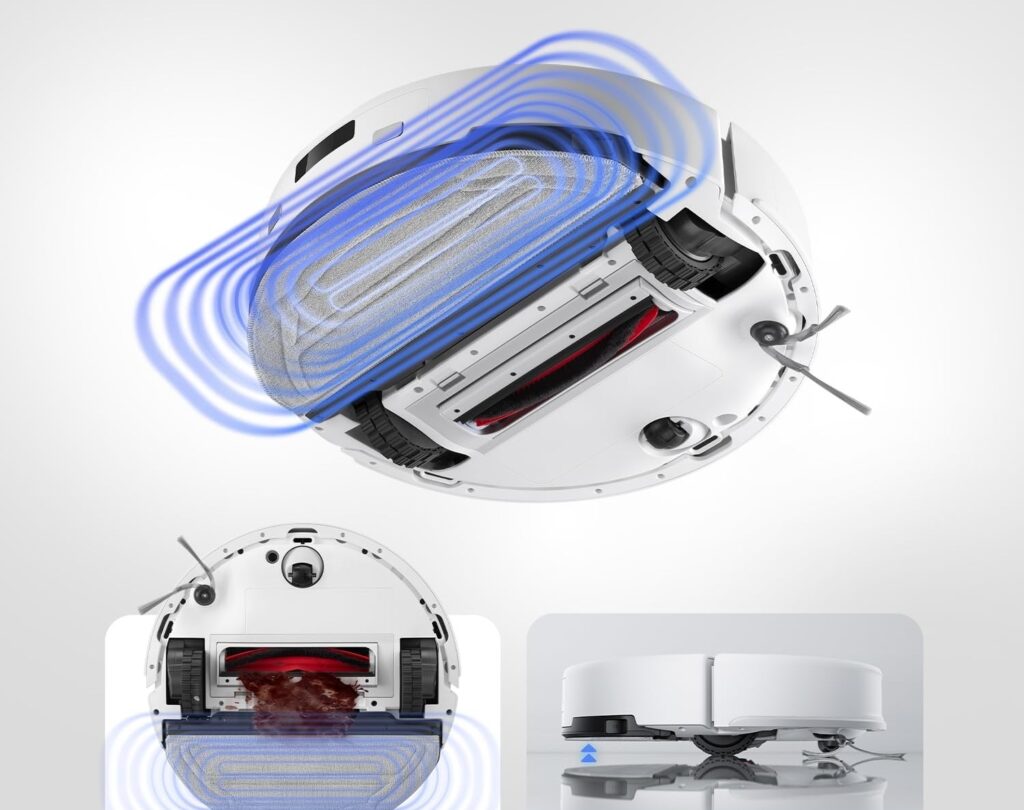
Because vibrating mops generally leave less moisture behind, they’re a popular choice for homeowners who prefer quicker drying floors or have flooring that benefits from lighter mopping. They perform well when removing fine dust, pet hair left behind after vacuuming, crumbs, and light surface stains, making them ideal for regular touch-up cleaning between deeper mopping sessions.
While vibrating mops provide an efficient and gentle clean, they are typically better suited to lighter messes than heavy-duty scrubbing. Sticky food spills or heavily soiled areas may require additional cleaning passes or occasional manual attention, particularly if the stains have been left to dry.
Which Mop System Is Best?
There isn’t a single “best” mopping technology—only the one that’s best suited to your home.
If your household regularly deals with liquid spills, food messes, or sticky residues, a roller mop offers excellent wet-cleaning performance thanks to its continuous scrubbing action and, on some models, fresh-water cleaning system.
For most households, however, spinning mops strike the best balance between cleaning power and versatility. They handle a wide variety of everyday messes, offer excellent floor coverage, and are well suited to routine whole-home cleaning.
Vibrating mops are an excellent option for homeowners who prioritize regular maintenance cleaning, lighter moisture levels, and keeping hard floors looking fresh between deeper cleans. They excel at removing dust and light debris while leaving minimal water behind.
Final Thoughts
As robot vacuum technology continues to evolve, manufacturers are finding new ways to improve mopping performance. While suction power often receives the most attention, the type of mopping system can have just as much influence on how clean your hard floors feel after each cleaning cycle.
Whether you choose a roller, spinning, or vibrating mop, the most effective robot vacuum is ultimately the one that matches your home’s cleaning habits. Homes with frequent spills may benefit from the deep wet-cleaning ability of a roller mop, while busy households looking for reliable all-around performance may prefer spinning mops. For those who simply want to maintain clean floors with minimal effort, vibrating mops provide an efficient solution for everyday upkeep.
By understanding the strengths of each mopping system, you’ll be better equipped to choose a robot vacuum that keeps your floors consistently clean while fitting seamlessly into your daily routine.