


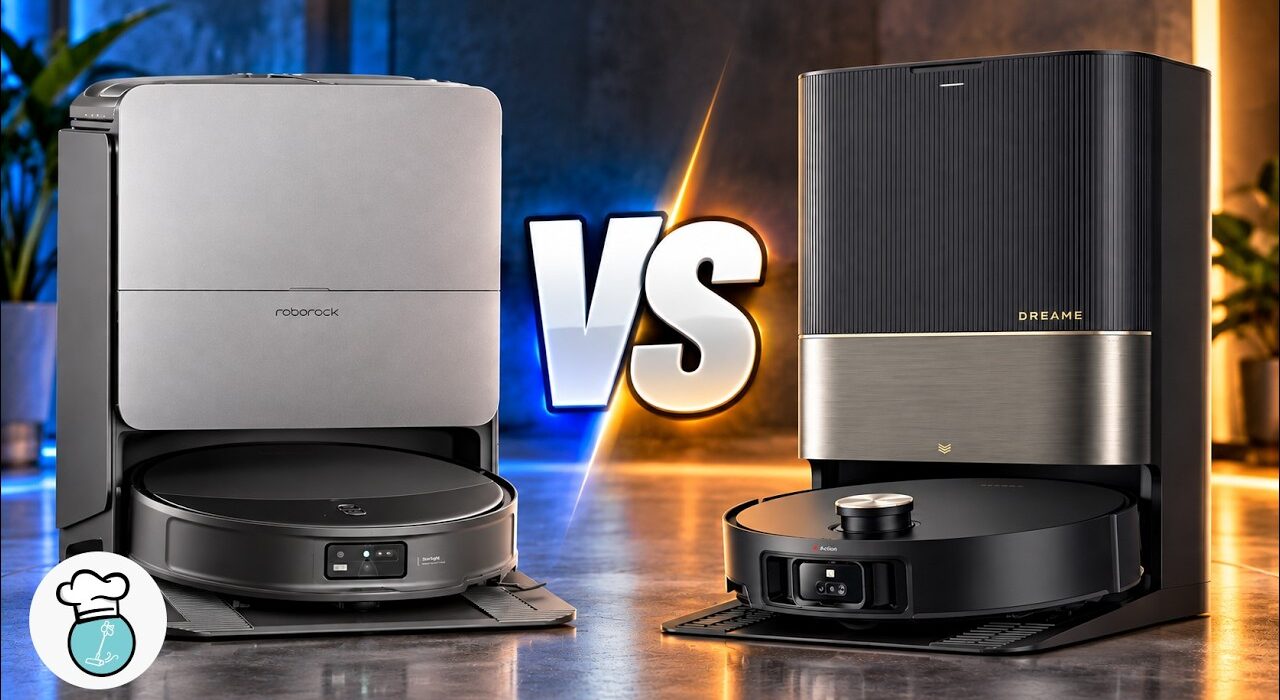
Choosing a high-end robot vacuum can be challenging, especially when two models offer impressive cleaning performance, advanced navigation, and fully automated maintenance. Two models that stand out are the Roborock Saros 20 and the Dreame X50 Ultra.
Both robot vacuums are designed to handle almost every aspect of floor cleaning, including vacuuming, mopping, washing and drying mop pads, automatically emptying dustbins, and navigating around obstacles. However, despite their similarities, there are some important differences that could make one a better choice for your home.
Roborock and Dreame previously provided us with these units for testing. However, this comparison is not sponsored, and we conducted all testing and comparisons independently.
So, which robot vacuum delivers the better overall experience? Let’s take a closer look.
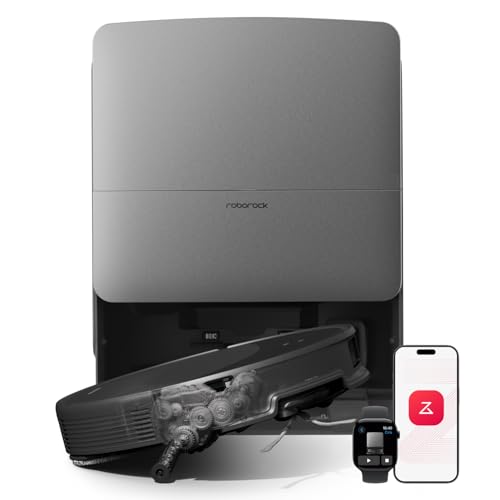
Roborock Saros 20 Robot Vacuum and Mop, 3.46 in Double-Layer Threshold, 36,000 Pa, 3.14 Ultra Slim, Zero-Tangling for Pet Hair, 212 F Hot Water Wash, AI Powered Smart Cleaning for Carpet, Black

DREAME X50 Ultra Robot Vacuum and Mop with Auto-Empty and Mop Self-Cleaning, 20,000Pa Suction, Obstacle Avoidance and 360° Navigation, Corner to Edge Deep Cleaning, Detangling Brush


1. Design and Build Quality
One of the first noticeable differences between the Roborock Saros 20 and Dreame X50 Ultra is their height. The Saros 20 measures just 3.13 inches tall, making it slimmer than the X50 Ultra, which measures 3.5 inches. This gives the Roborock an advantage when cleaning underneath low-profile furniture, such as sofas, beds, and cabinets.
Both models feature extendable side brushes and mop systems designed to improve edge and corner cleaning. They also use dual-brush designs intended to minimize hair tangles. The Saros 20 features Roborock’s DuoDivide brush, which we’ve found particularly effective at preventing hair from wrapping around the roller. Meanwhile, the X50 Ultra uses Dreame’s conical dual-brush system, designed to handle long hair measuring up to 11.8 inches.
Another important difference is how each robot handles thresholds and obstacles between rooms. The Saros 20 uses Roborock’s AdaptiLift chassis and is rated to cross double-layer thresholds up to 3.46 inches. The X50 Ultra features Dreame’s ProLeap system, which can handle obstacles up to 2.36 inches. This gives the Saros 20 a clear advantage for homes with unusually tall door thresholds or raised transitions between rooms.
However, the X50 Ultra has another interesting feature: retractable LiDAR. Its navigation module can retract when the robot needs to clean underneath furniture, reducing its overall height. The Saros 20 doesn’t offer this feature, although its slimmer body still gives it an advantage when navigating particularly low spaces.
Both models also include LED lighting, self-emptying dustbins, and sophisticated multifunctional docking stations.
2. Vacuuming Performance
Suction power is often one of the first specifications people compare when shopping for a robot vacuum. On paper, the Roborock Saros 20 has a significant advantage, offering up to 36,000 Pa of suction power compared with the Dreame X50 Ultra’s 20,000 Pa.
However, maximum suction power doesn’t tell the whole story. Real-world cleaning performance also depends on airflow, carpet pressure, brush design, and how effectively the robot picks up different types of debris.
Interestingly, our measurements showed that the Dreame X50 Ultra produced higher airflow and carpet pressure than the Saros 20. In our carpet measurements, the X50 Ultra recorded 497.1 FPM of airflow compared with 454.2 FPM for the Saros 20. It also produced 0.4 kPa of carpet pressure, compared with 0.25 kPa for the Roborock.
Despite the Dreame’s stronger airflow and carpet pressure measurements, the Saros 20 performed better in our carpet coffee test, achieving a perfect score of 100 compared with 90 for the X50 Ultra.
The Saros 20 was also noticeably quieter during our testing, reaching just 71.8 decibels compared with 79.2 decibels for the Dreame. This could be an important consideration if you prefer running your robot vacuum while working, relaxing, or spending time at home.
Here’s a quick look at how the two models compared in our vacuuming tests:
| Test Measurement | Roborock Saros 20 | Dreame X50 Ultra |
|---|---|---|
| Maximum suction power | 36,000 Pa | 20,000 Pa |
| Carpet airflow | 454.2 FPM | 497.1 FPM |
| Carpet pressure | 0.25 kPa | 0.4 kPa |
| Carpet coffee test | 100 | 90 |
| Noise level | 71.8 dB | 79.2 dB |
Both robots feature automatic dustbin-emptying systems, although the X50 Ultra has a larger onboard dustbin. It offers a capacity of 395 ml, while the Saros 20 has a smaller 259 ml dustbin.
For households with pets or long-haired family members, both brush systems are particularly useful. Their dual-brush designs help minimize hair tangles, reducing the amount of time you’ll need to spend manually cleaning the rollers compared with traditional single-brush designs.
Overall, the Saros 20 delivered better results in our carpet coffee test and operated more quietly, while the X50 Ultra recorded higher carpet airflow and pressure measurements and offered a larger onboard dustbin.
3. Mopping Performance
Both the Roborock Saros 20 and Dreame X50 Ultra offer an impressive level of mopping automation. Their multifunctional docks can automatically wash and dry the mop pads, clean the docking station, and dispense cleaning solution. Both also feature extendable mop systems designed to improve cleaning along walls and around corners.
However, one major difference is the temperature used to wash their mop pads. The Saros 20 can wash its mop pads using water heated to 212°F, while the X50 Ultra reaches a maximum temperature of 176°F. This gives Roborock a considerable advantage in maximum mop-washing temperature.
Another useful feature of the Saros 20 is its ability to automatically remove and reinstall its mop pads. This provides additional flexibility, particularly when switching between different cleaning tasks. During our testing, we also found that the Saros 20 could deliver a very wet mopping performance, which may appeal to users who prefer that cleaning approach.
However, we’re less convinced about its actual mop coverage, despite the presence of an extendable mop system.
The X50 Ultra doesn’t offer the same automatic mop-removal feature, but it still provides a highly automated mopping experience with minimal manual maintenance. Ultimately, both models are excellent choices if you want a robot vacuum that can take care of most of your floor-cleaning routine without constant supervision.
4. Navigation and Obstacle Avoidance
Advanced navigation is essential for premium robot vacuums, particularly in homes with furniture, cables, toys, and other objects scattered across the floor. Both models use sophisticated combinations of sensors, cameras, and LiDAR technology to map their surroundings and navigate around obstacles.
The Roborock Saros 20 features the company’s StarSight navigation system, which combines 3D Time-of-Flight (ToF) sensors with an RGB camera. The Dreame X50 Ultra uses an AI-powered camera system alongside its retractable LiDAR module. Both robots also support video monitoring, allowing users to access their robot’s camera remotely.
Despite their advanced navigation systems, our obstacle-avoidance testing revealed a significant difference between the two models. The Saros 20 achieved an obstacle-avoidance score of 70.83%, while the X50 Ultra scored 0%.
The Saros 20 performed considerably better in our testing, although it wasn’t perfect. We particularly noticed some limitations when it encountered obstacles on carpets.
The X50 Ultra’s result was disappointing, but it doesn’t necessarily mean the robot will constantly get stuck in everyday use. Customer experiences are mixed, with some owners reporting very few navigation problems while others experience frequent issues.
Another limitation we noticed with the Saros 20 involves its video-monitoring functionality. You cannot directly take photos or record videos while using the monitoring mode.
Battery life is another consideration, especially for larger homes. The Roborock Saros 20 has a rated battery life of up to 200 minutes, while the Dreame X50 Ultra is rated for up to 220 minutes. This gives the Dreame a slight advantage on paper, although actual battery performance will depend on cleaning settings, floor types, and operating conditions.
5. Smartphone App and Smart Features
Both robot vacuums offer dedicated smartphone applications for iOS and Android devices. Their apps provide extensive controls for mapping, scheduling, cleaning preferences, and camera access, allowing users to customize how their robots clean their homes.
The Roborock app currently has a rating of 4.75 out of 5 stars, compared with 4.1 stars for the Dreame app.
Roborock’s application includes several useful features, such as SmartPlan for automated cleaning adjustments, smart mapping and room management, voice control, and remote camera access. These features make it easier to customize cleaning routines and monitor the robot while away from home.
The Dreame app is similarly feature-rich, offering detailed cleaning controls and multiple carpet-cleaning options. Users can also adjust various cleaning preferences to suit different rooms and floor types.
Both applications provide plenty of flexibility, but Roborock currently has the higher app rating.
One important difference is wireless network compatibility. The Roborock Saros 20 supports both 2.4GHz and 5GHz Wi-Fi networks. For the USA market, the Dreame X50 Ultra is listed as supporting 2.4GHz Wi-Fi only. This is worth considering if your home network relies on a particular Wi-Fi band.
6. Customer Reviews and Owner Feedback
Beyond our own testing, customer feedback can provide useful insight into how these robot vacuums perform over time. Both models receive plenty of positive comments about their cleaning performance, mapping capabilities, and overall convenience.
Saros 20 owners particularly appreciate its mopping performance, accurate mapping capabilities, and relatively quiet operation. However, not all feedback is positive. Some owners mention that the automatic dustbin-emptying process can be quite loud. There are also mixed opinions about long-term reliability and whether the robot offers enough value for its relatively high price.
Dreame X50 Ultra owners similarly praise its cleaning performance, mapping capabilities, and relatively quiet operation. However, price remains a common concern. Obstacle avoidance is another area where customer experiences vary. While some owners report that their robots navigate their homes without significant problems, others mention inconsistent obstacle detection and occasional navigation issues.
Overall, both models receive positive feedback, but neither is completely free from complaints.
7. Roborock Saros 20 vs. Dreame X50 Ultra: Which Should You Buy?
After testing and comparing both models, it’s clear that the Roborock Saros 20 and Dreame X50 Ultra are two highly capable robot vacuums with different strengths. The best choice ultimately depends on your home’s layout and which features matter most to you.
The Roborock Saros 20 makes more sense if you need a slimmer robot vacuum for cleaning underneath low furniture or have tall thresholds between rooms. It also offers hotter mop-pad washing, quieter operation, and better results in our carpet coffee and obstacle-avoidance tests. Its compatibility with both 2.4GHz and 5GHz Wi-Fi networks is another advantage worth considering.
On the other hand, the Dreame X50 Ultra is an interesting option if you prefer retractable LiDAR, a larger onboard dustbin, and higher carpet airflow and pressure measurements. It also offers a slightly longer rated battery life and a brush system specifically designed to handle particularly long hair.
Neither robot is perfect, but both offer plenty of advanced features that make everyday floor cleaning considerably easier.
Final Verdict
The Roborock Saros 20 and Dreame X50 Ultra are both impressive premium robot vacuums, offering a level of automation that makes everyday floor cleaning considerably easier.
The Roborock Saros 20 stands out for its slimmer design, better threshold-crossing capabilities, hotter mop washing, quieter operation, and stronger results in our carpet coffee and obstacle-avoidance tests.
Meanwhile, the Dreame X50 Ultra offers retractable LiDAR, a larger dustbin, higher carpet airflow and pressure measurements, and a slightly longer rated battery life.
Ultimately, your decision should come down to the features that matter most in your home. If you prioritize obstacle avoidance, lower noise levels, and a slimmer design, the Saros 20 is worth considering. If you prefer a larger dustbin, retractable LiDAR, and stronger carpet airflow measurements, the X50 Ultra may be the better fit.
Both are packed with features that make them genuinely hands-off compared with older robot vacuums.
If you’re interested in either model, check out the links below to learn more about the Roborock Saros 20 and Dreame X50 Ultra.
Roborock Saros 20 Robot Vacuum and Mop, 3.46 in Double-Layer Threshold, 36,000 Pa, 3.14 Ultra Slim, Zero-Tangling for Pet Hair, 212 F Hot Water Wash, AI Powered Smart Cleaning for Carpet, Black
DREAME X50 Ultra Robot Vacuum and Mop with Auto-Empty and Mop Self-Cleaning, 20,000Pa Suction, Obstacle Avoidance and 360° Navigation, Corner to Edge Deep Cleaning, Detangling Brush