
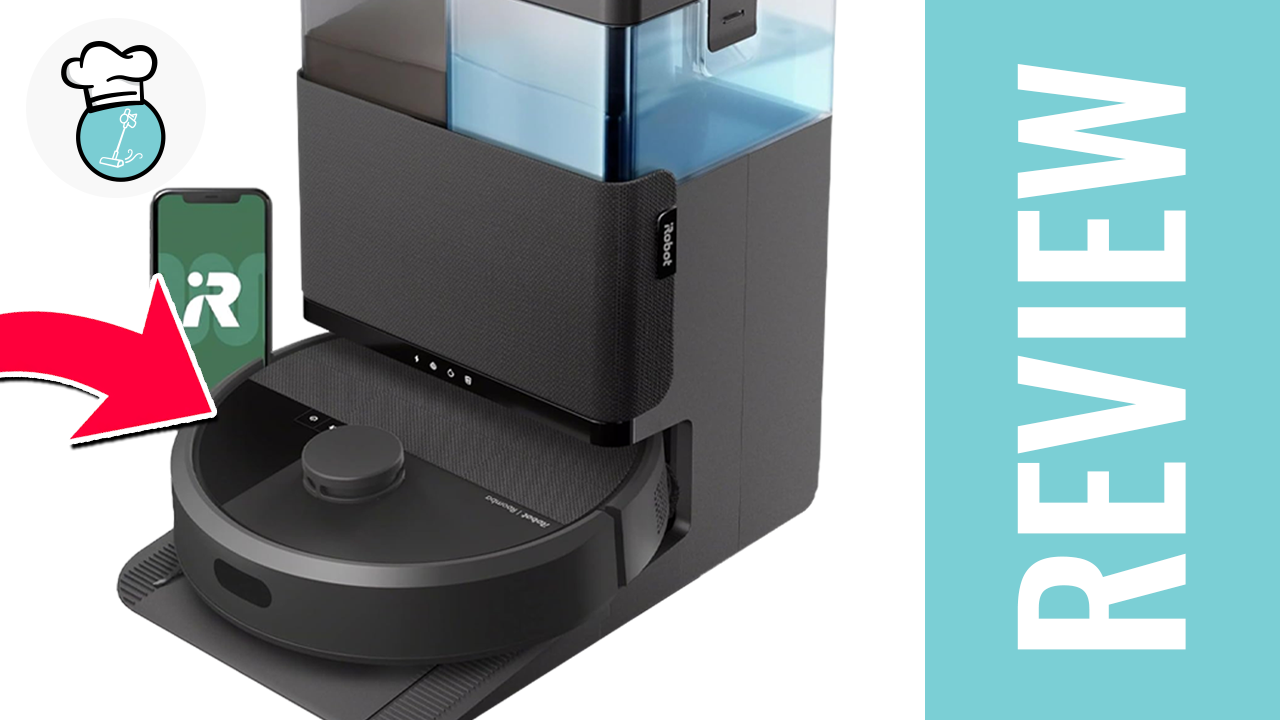
Today, we’re taking a closer look at the iRobot Roomba 405 — our second hands-on experience with the newest generation of Roombas, following the Roomba 105. After testing more than 100 robot vacuums on the channel, it’s genuinely exciting to finally see iRobot embrace LiDAR navigation and modern mopping hardware. But while the Roomba 405 makes meaningful progress, it still feels like a case of “better late than never.”
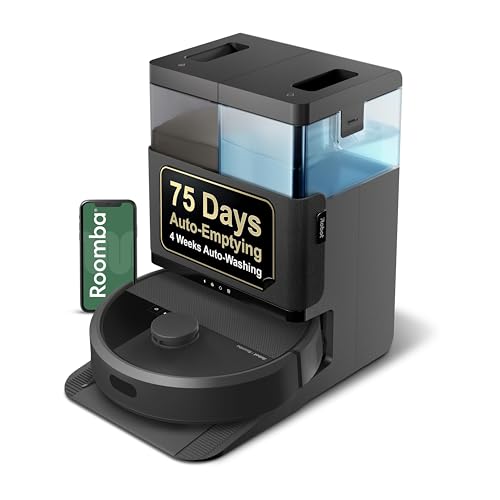
iRobot Roomba Plus 405 (G185) Combo Robot Vacuum & Mop with AutoWash Dock - Spinning Mop Pads, Self-Empties, Pad Washing & Drying, Self-Cleaning, Pad-Lift, LiDAR Navigation
- Excellent mopping & scrubbing
- Auto-washing & self-emptying
- LiDAR navigation
- Carpet detection
- Buggy, slow mobile app
- Long update process
- No precise suction or water controls
- Confusing, unintuitive UI
There’s a lot to like here, especially when it comes to real-world cleaning performance, but a frustrating app experience and a few outdated design decisions prevent it from truly standing out in today’s highly competitive mid-range market.
Unboxing and Initial Setup
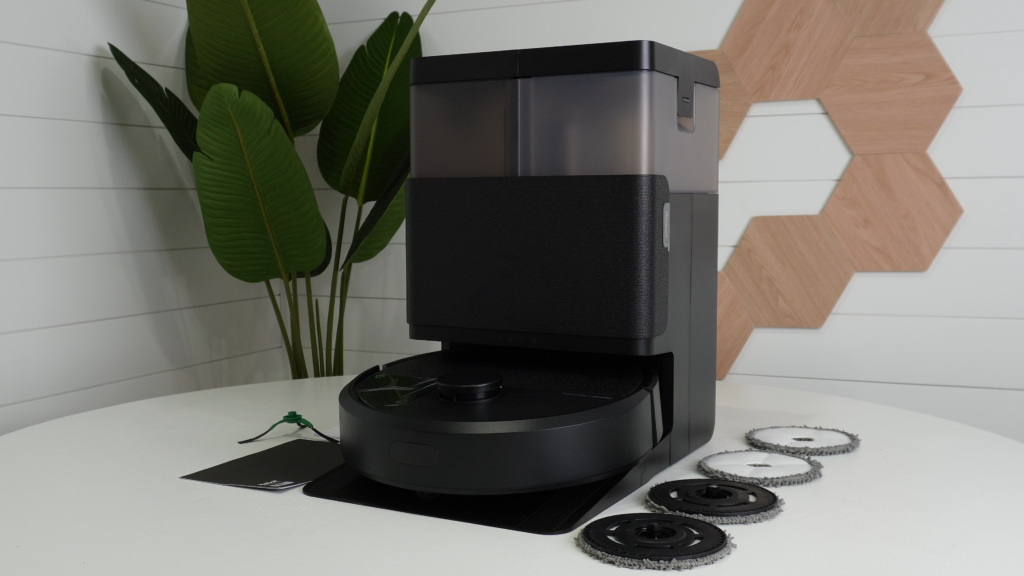
Inside the box, you’ll find the robot vacuum itself, the auto-wash dock with integrated power cord, an extra set of mop pads, a spare auto-empty bag, and the usual documentation. Setup is fairly straightforward overall. Once the dock is plugged in and the clean water tank is filled, the robot simply needs to charge before connecting through the iRobot Home app on iOS or Android.
However, longtime Roomba users should be aware of an awkward software transition happening within iRobot’s ecosystem. Older Roombas, including models from the 600 series and J-series lineup, now rely on the “iRobot Home App Classic,” while newer devices like the Roomba 405 require the redesigned app. Although your account information carries over between both versions, needing two separate apps to manage different generations of Roombas feels unnecessarily clunky.
Unfortunately, the new app doesn’t improve the overall experience as much as we had hoped.
The App Experience Still Needs Serious Work
The biggest weakness of the Roomba 405 isn’t the hardware — it’s the software experience surrounding it.
The redesigned app feels unintuitive, sluggish, and occasionally frustrating to navigate. Menus can feel cluttered, settings aren’t always easy to locate, and the overall interface lacks the polish we’ve come to expect from competing brands. For users who frequently customize cleaning routines, adjust room settings, or manage multiple maps, the experience can quickly become irritating.
If you’re someone who simply sets a cleaning schedule and rarely opens the app again, this may not matter much. But for power users who expect smooth and responsive controls, the app could easily become a dealbreaker.
The firmware update process didn’t help matters either. Right out of the box, the Roomba 405 required a lengthy update that took nearly an hour to complete, offering very little feedback during the process. Several times it appeared frozen entirely, making troubleshooting frustrating and leaving a poor first impression. We experienced similar behavior with the Roomba 105 as well, which suggests these issues may stem from backend or server-side problems rather than isolated bugs.
Finally, Roomba Gets LiDAR Navigation
Despite the software frustrations, the Roomba 405 introduces some genuinely meaningful hardware upgrades.
The biggest improvement is the addition of LiDAR navigation. Older non-LiDAR Roombas were notoriously slow during mapping, often wandering inefficiently through homes while learning the layout. The Roomba 405 changes that dramatically. Initial mapping is now much faster and far more competitive with other modern robot vacuums in this category.
iRobot also continues to excel in fit and finish. The Roomba 405 carries the familiar premium Roomba aesthetic, with a clean design and solid construction that immediately feels polished and well-built.
Cleaning Performance Is Better Than the Specs Suggest
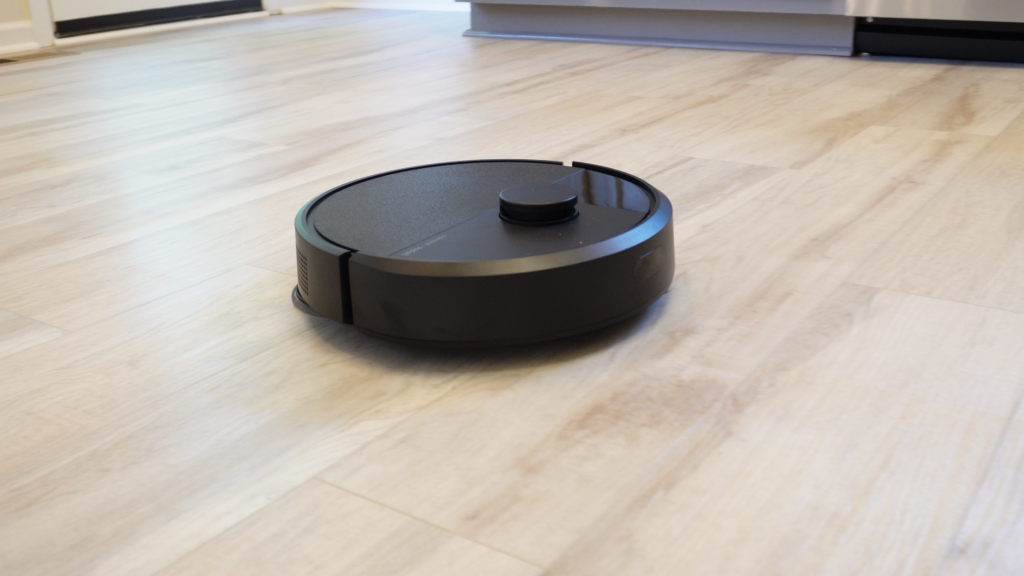
On paper, some of the Roomba 405’s performance numbers don’t look especially impressive. The robot is rated for 7,000Pa of suction, which falls below the average across all the robot vacuums we’ve tested. However, that average also includes ultra-premium flagship models pushing beyond 20,000Pa, so 7,000Pa remains respectable for a mid-range robot vacuum.
More importantly, real-world cleaning performance turned out to be surprisingly strong.
In our high-traffic pet hair tests, the Roomba 405 handled hair, crumbs, and fine dust with little trouble. Carpet cleaning performance was consistently solid, while the upgraded mopping system left hard floors looking noticeably cleaner and fresher compared to the Roomba 105’s simpler drag-pad design.
The robot ultimately earned a 95 out of 100 in our practical cleaning tests, comfortably above the overall category average of 88. Even though some airflow and suction measurements fell below average in controlled testing, the Roomba 405 consistently performed better than expected during everyday use.
That said, hair tangles on the brush roller remain an issue. Unlike many competing models that now feature conical rollers or split anti-tangle brush systems, the Roomba 405 still relies on a more traditional roller design. For homes with pets or long hair, that means more frequent manual cleaning and maintenance.
Noise and Suction Performance
One interesting difference between the Roomba 405 and the earlier Roomba 105 is noise output. Despite sharing the same rated suction power, the 405 operates noticeably louder, reaching around 82dB in our testing — roughly 9dB above the category average.
Thankfully, suction settings can still be adjusted, so users don’t necessarily need to run the robot at maximum power all the time.
In our carpet suction testing, the Roomba 405 measured 343 feet per minute (FPM), below the category average of 420 FPM but still fairly consistent with recent iRobot models. Airflow performance also remained modest compared to competitors, though those lower numbers didn’t seem to significantly hurt real-world cleaning results.
A Major Improvement in Mopping
Perhaps the most welcome upgrade on the Roomba 405 is the introduction of dual spinning mop pads.
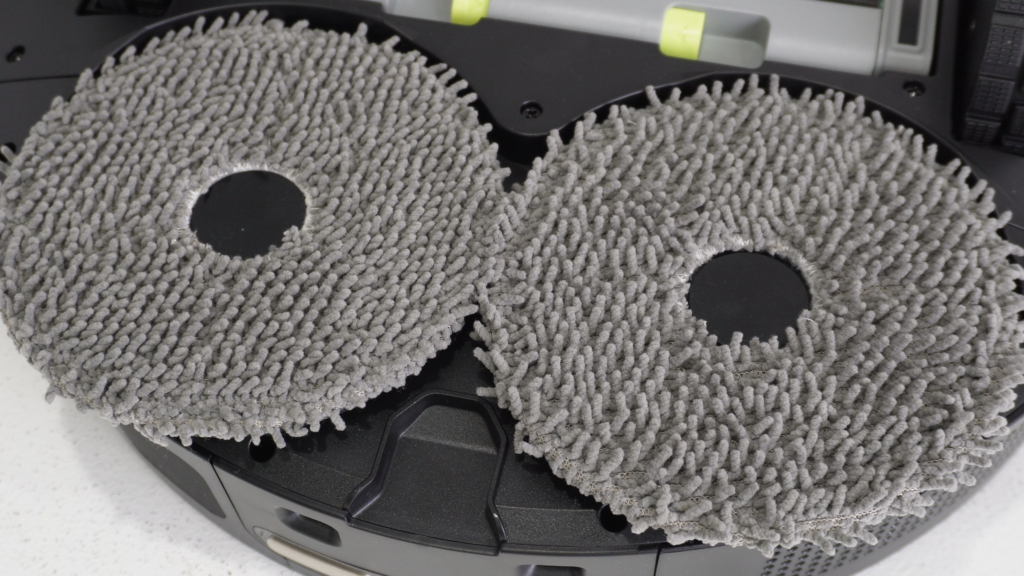
Honestly, it’s surprising it took this long for Roomba to adopt this style of mopping system considering how common it has become throughout the industry. Still, the implementation works fairly well overall and represents a major step forward compared to previous Roomba models.
The mop pads can automatically lift over carpeted surfaces and return to the dock for self-washing and drying. While the system lacks premium features like hot water washing, hot air drying, automatic detergent dispensing, or mop extension arms, it still delivers a noticeably improved mopping experience.
One limitation is the lack of an onboard water tank. Instead, the robot frequently returns to the dock to rewet and rinse its mop pads during cleaning sessions. While functional, this approach is less efficient than many competing systems currently available.
At the same time, the robot vacuum industry is already shifting toward roller-style and track-style mopping systems. Interestingly, iRobot has already announced the upcoming Roomba Combo Max 705, which will feature a roller mop design, suggesting the company is aware of where the market is heading next.
Smart Features and Everyday Convenience
The compact auto-wash dock is one of the stronger aspects of the Roomba 405 package. It handles automatic dust emptying, mop washing, and pad drying while maintaining a relatively compact footprint that doesn’t dominate a room.
Depending on how often the robot is used, many households could potentially go weeks or even months before needing to replace the vacuum bag. At this price point, hands-off maintenance features like these are quickly becoming expected, and the Roomba 405 performs reasonably well in this area.
The app itself supports essential modern features including multi-floor mapping for up to three levels, no-go zones, room-specific cleaning, customizable routines, and voice assistant compatibility through Amazon Alexa and Google Assistant. Functionally, most of the expected tools are present. The problem is simply the execution. The app experience lacks the refinement and polish found in many competing ecosystems, making even basic adjustments feel more cumbersome than they should.
Final Verdict
The iRobot Roomba 405 is undeniably a step forward for iRobot. LiDAR navigation, dual spinning mop pads, and a more capable auto-wash dock finally bring Roomba closer to the standards that competing brands established years ago.
To the robot’s credit, it performs genuinely well in real-world cleaning despite some underwhelming paper specifications. Hard floor cleaning is especially strong, the new mopping system is a major improvement, and the upgraded navigation makes daily operation far more efficient than older Roombas.
However, the overall experience is still held back by frustrating software, slower refinement, and a few hardware limitations that feel outdated in 2026. At its mid-range price point, the Roomba 405 remains competitive, but it doesn’t quite redefine the category.
If iRobot can modernize the software experience and continue refining its hardware, future models could become serious contenders once again. For now, the Roomba 405 feels less like a revolution and more like a cautious but necessary evolution.
iRobot Roomba Plus 405 (G185) Combo Robot Vacuum & Mop with AutoWash Dock - Spinning Mop Pads, Self-Empties, Pad Washing & Drying, Self-Cleaning, Pad-Lift, LiDAR Navigation
- Excellent mopping & scrubbing
- Auto-washing & self-emptying
- LiDAR navigation
- Carpet detection
- Buggy, slow mobile app
- Long update process
- No precise suction or water controls
- Confusing, unintuitive UI
Leave feedback about this