
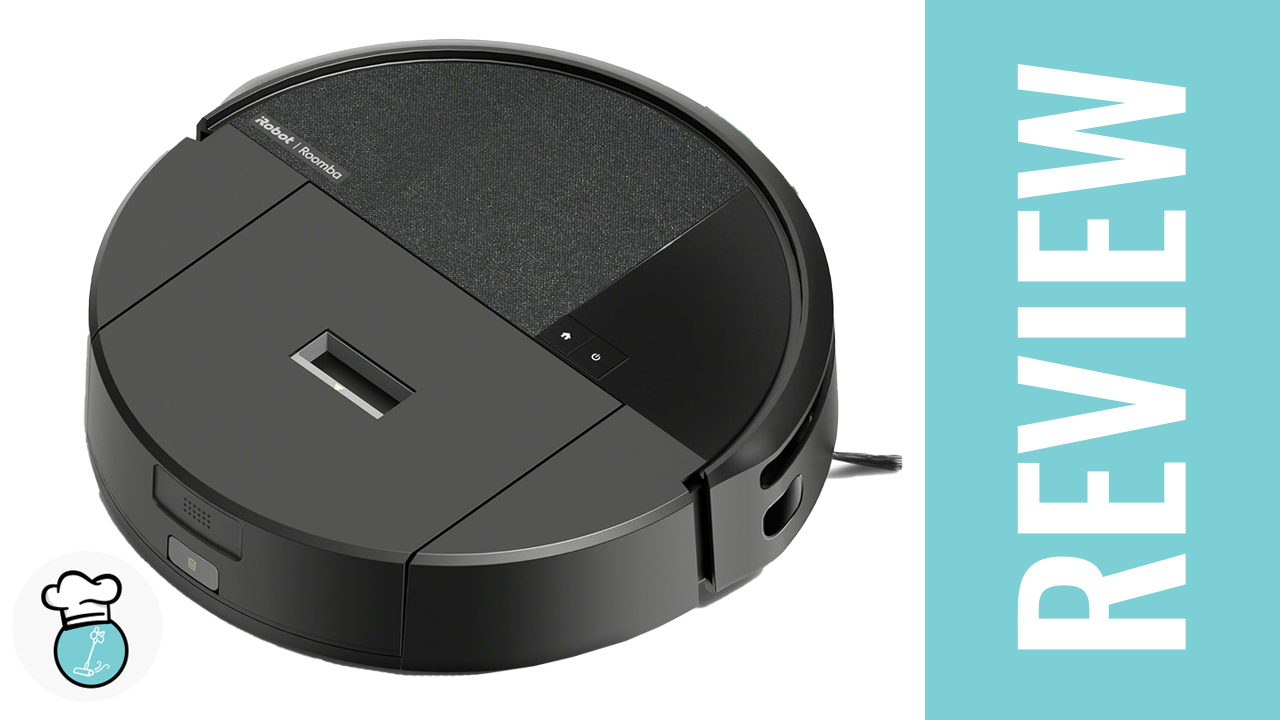
The iRobot Roomba 205 is one of the more interesting releases from iRobot’s latest lineup, largely because it feels like a blend of old and new ideas. When iRobot announced this model earlier in the year, it immediately stood out to us thanks to its dust compression system and the long-awaited addition of front-facing LiDAR navigation. After testing more than 130 robot vacuums, we were curious to see whether the Roomba 205 could finally close the gap with increasingly competitive alternatives.
This unit was provided for review, but this is not a sponsored post. As always, our impressions are based on real testing and data, not marketing claims.
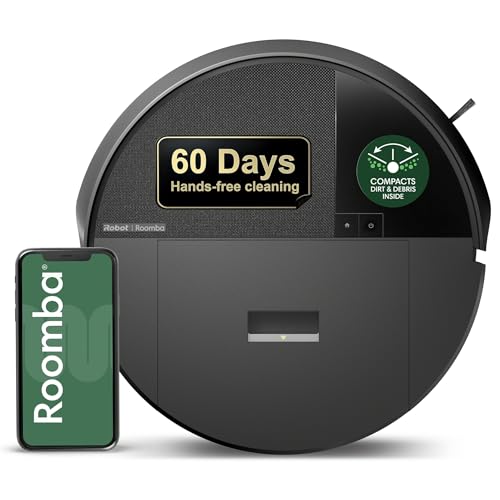
iRobot Roomba 205 DustCompactor Vac Robot Vacuum - Compacts Dirt Inside, No Emptying for 60 Days, Space Saving, No Dock Needed, Bagless, Intense Power-Lifting Suction, LiDAR Navigation, Multi-Surface
- Built-in dust compactor
- LiDAR navigation
- Decent vacuuming performance
- Faster mapping than previous-gen Roombas
- Buggy, slow app
- Unintuitive UI
- No dust compaction controls
- No obstacle avoidance
- Returns to charge too early (20–40% battery left)
Setup and First Impressions
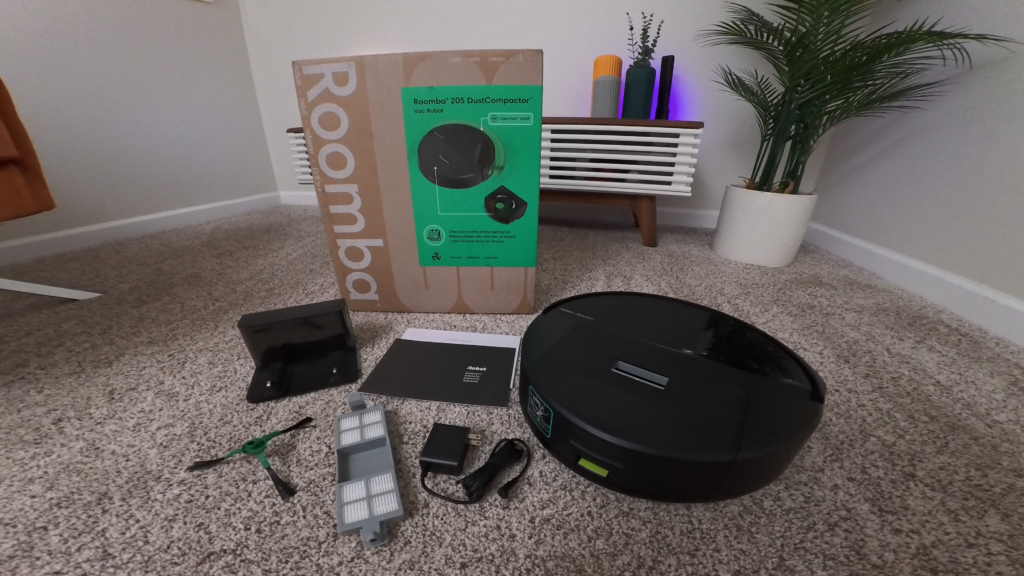
Unboxing the Roomba 205 is straightforward and familiar. Inside the box is the robot itself, a compact charging station with a power cord, an extra filter, and the usual documentation. Setup is quick: plug in the dock, allow the robot to charge, and connect it to the iRobot Home app, which is available on both iOS and Android.
However, long-time iRobot users should be aware of an important change. iRobot now splits device support across two apps. Older models such as the 600i or j-Series remain in the iRobot Home App Classic, while newer models like the Roomba 205 use the updated iRobot Home app. While your account transfers seamlessly and all devices remain visible, controlling them requires switching between apps. It’s an awkward solution that adds unnecessary friction.
Unfortunately, the new app itself doesn’t help matters. It feels unintuitive and clunky, failing to fix many of the issues that frustrated users of the original version. In some areas, it’s arguably worse. If you rely heavily on app-based controls and map editing, this alone could be a dealbreaker. On the other hand, users who simply set schedules and rarely open the app may find it tolerable.
Mapping and Navigation Improvements
Out of the box, the Roomba 205 required a firmware update, but the process was refreshingly quick. This was a welcome change compared to previous models like the Roomba 104, 105, and 405, which often required lengthy updates during setup.
The inclusion of LiDAR navigation is long overdue, but its impact is immediately noticeable. Initial mapping is significantly faster and finally feels competitive with other brands. Anyone who has used iRobot’s older non-LiDAR models will appreciate just how much of an improvement this is. Rooms are mapped efficiently, and navigation is more predictable than in past generations.
Cleaning Performance in Real Homes
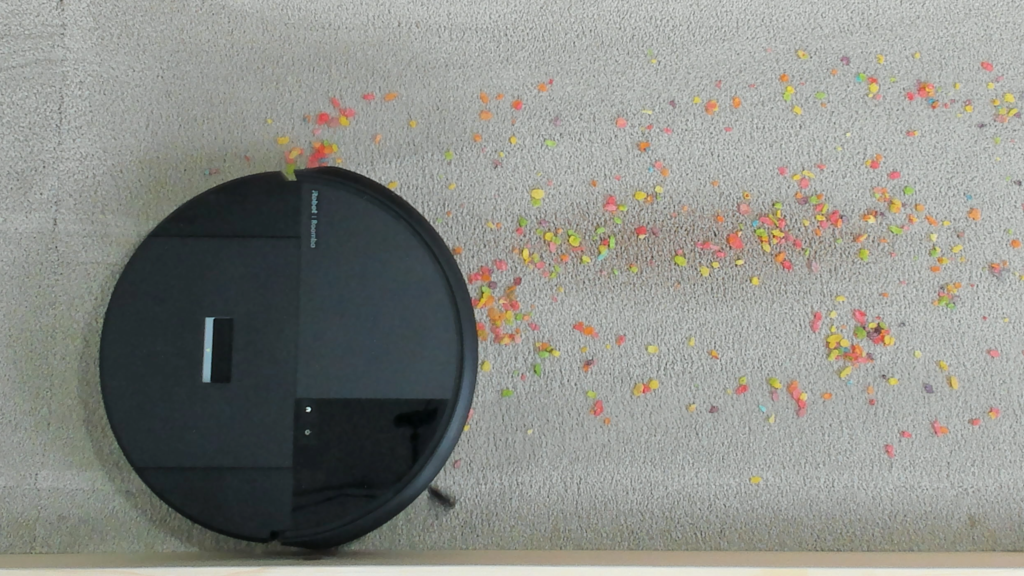
In our high-traffic, pet-heavy testing environment, the Roomba 205 delivered solid, reliable cleaning. It handled pet hair, crumbs, and fine dust without issue and performed consistently across hard floors and carpet.
That said, hair tangling on the brush roller was still present. This isn’t surprising given the absence of a conical brush or active detangling system—features that are becoming increasingly common at this price point. It’s an area where iRobot continues to trail competitors, and one that could be easily improved in future models.
Suction Power and Test Results
For the first time, iRobot has clearly published suction specifications, rating the Roomba 205 at 7,000 Pascals, the same as the Roomba 104 and 105. While this figure sits below our overall average, it’s important to remember that our dataset includes flagship models exceeding 20,000 Pascals. For an entry-level robot vacuum, 7,000 Pascals is perfectly respectable.
Noise levels tested slightly below average, though the difference is subtle in everyday use. Carpet airflow measured lower than category norms, and pressure readings were also below average, which initially suggested mediocre deep-clean performance. Surprisingly, real-world results told a different story. The Roomba 205 earned a 90 out of 100 in our deep-clean testing, outperforming our overall average. Despite modest specs on paper, the brush design plays a major role in delivering better-than-expected results.
Dust Compression: Practical, Not Perfect
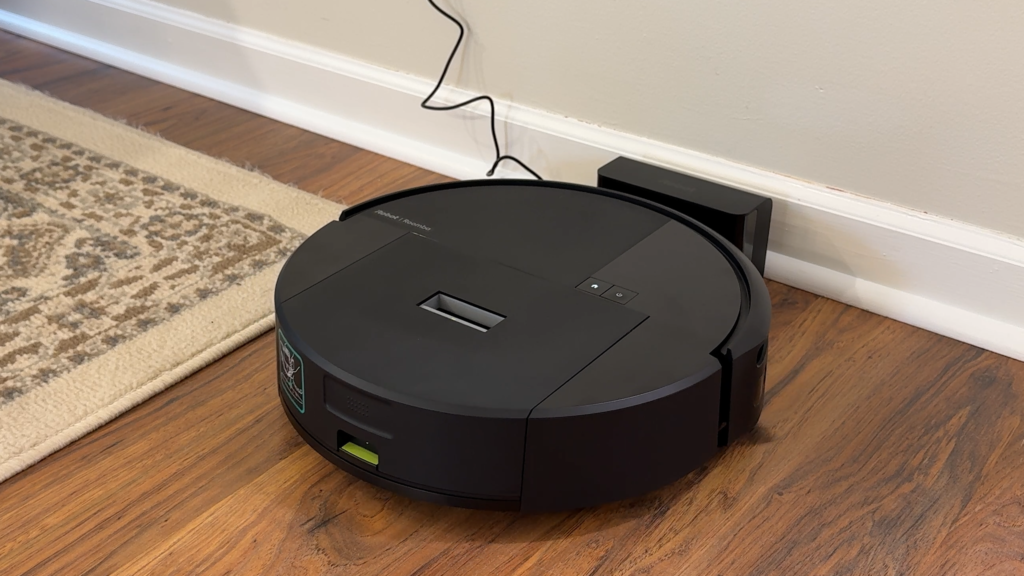
One of the Roomba 205’s standout features is its dust compression system, which eliminates the need for a bulky self-empty dock. This allows for a much smaller charging base, making it particularly appealing for apartments, condos, or homes with limited storage space.
In testing, a full dust bin of hair and debris was compressed to roughly half its original volume. The trade-off is a faint rattling sound during operation, likely caused by the compression mechanism. Still, avoiding disposable vacuum bags is a meaningful quality-of-life improvement that saves money over time and reduces waste.
App Experience and Smart Features
On paper, the iRobot Home app includes everything expected of a modern robot vacuum. Users can adjust suction, clean specific rooms or zones, set no-go areas, manage multiple maps, and control the robot using Amazon Alexa or Google Assistant.
In practice, however, the experience is frustrating. Navigation feels sluggish, map editing is awkward, and simple tasks often take more effort than they should. While the feature set is adequate, the execution significantly detracts from the overall experience and remains one of the Roomba 205’s biggest weaknesses.
What Users Are Saying
Community feedback largely mirrors our experience. Many Reddit users describe the Roomba 205 as a solid mid-range update that finally brings LiDAR mapping and dust compression to a more affordable Roomba. Its compact base and dependable cleaning performance make it a popular choice for smaller homes and apartments.
At the same time, complaints about the app are widespread. Users report clumsy map editing, inconsistent obstacle detection, and frustration with how the robot identifies furniture or curtains. The dust compactor is praised for reducing how often the bin needs to be emptied, though households with heavy pet shedding note that it can be messier than expected.
The Roomba 205 currently holds an average rating of 3.8 out of 5 stars. Most users find it easy to set up and effective at general cleaning, while opinions are mixed on edge cleaning, battery life, noise levels, and overall value.
Final Verdict
The iRobot Roomba 205 represents a clear step forward for the brand, even if it stops short of being truly competitive. Features like LiDAR navigation and dust compression finally arrive at a more accessible price point, and real-world cleaning performance exceeds what the specs might suggest. The smaller charging base is also a genuine advantage for homes where space is at a premium.
However, the app remains a major sticking point, and the lack of features such as obstacle avoidance, advanced brush design, or mopping keeps the Roomba 205 from standing out in a crowded market. Interestingly, the Roomba 205 shares significant design similarities with the 3i G10 Plus, which offers features like an extended side brush, built-in mopping, and a detangling comb at a similar price. Since 3i is one of iRobot’s manufacturing partners, that model may be worth considering for shoppers focused on maximum performance per dollar.
In the end, the Roomba 205 is a capable and reliable robot vacuum that shows iRobot moving in the right direction—but it also highlights just how much ground the company still needs to cover.
iRobot Roomba 205 DustCompactor Vac Robot Vacuum - Compacts Dirt Inside, No Emptying for 60 Days, Space Saving, No Dock Needed, Bagless, Intense Power-Lifting Suction, LiDAR Navigation, Multi-Surface
- Built-in dust compactor
- LiDAR navigation
- Decent vacuuming performance
- Faster mapping than previous-gen Roombas
- Buggy, slow app
- Unintuitive UI
- No dust compaction controls
- No obstacle avoidance
- Returns to charge too early (20–40% battery left)
Leave feedback about this