
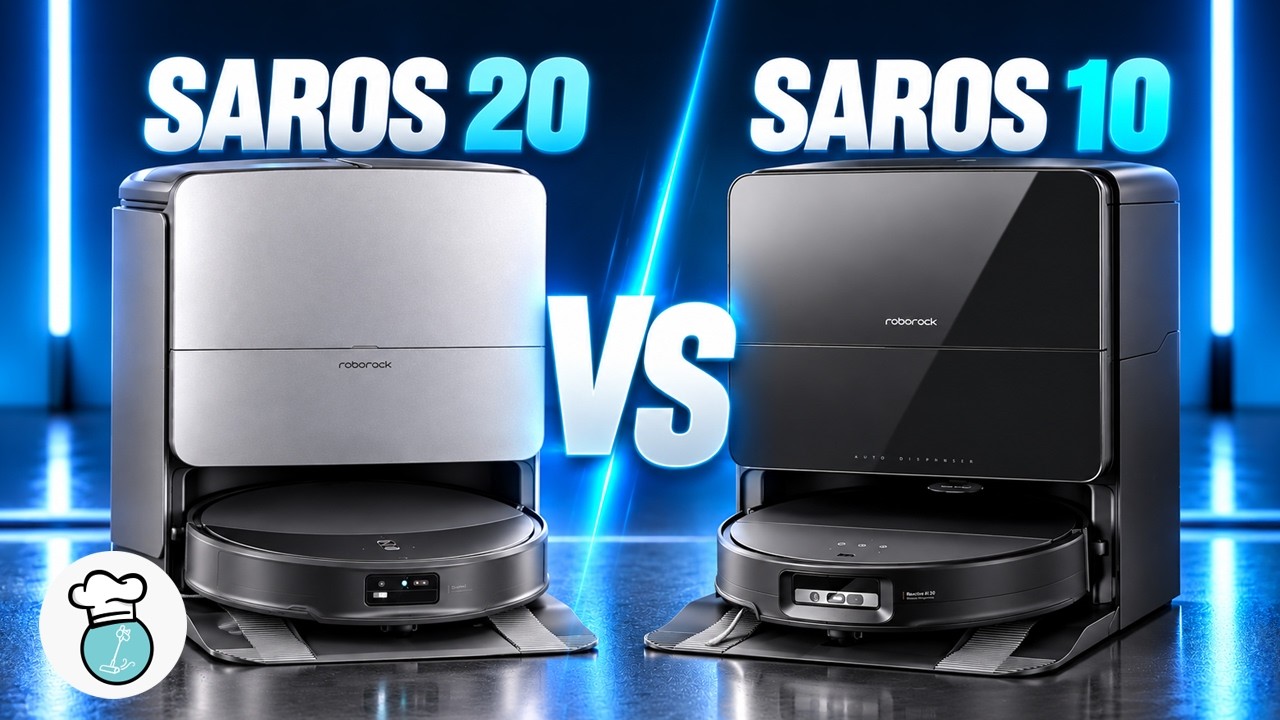
Roborock continues to push the boundaries of robot vacuum technology, and two of its flagship models, the Roborock Saros 20 and Saros 10, showcase just how advanced these machines have become. Both offer powerful vacuuming, sophisticated mopping systems, intelligent navigation, and highly automated docking stations. But how much better is the newer Saros 20, and is it worth choosing over the Saros 10?
In this comparison, we’ll take a closer look at both models, covering everything from design and cleaning performance to mopping capabilities, navigation, smart features, and customer feedback. More importantly, we’ll look at the results of our own testing to see how these two robot vacuums compare in real-world conditions.
Roborock previously provided these units for testing. However, this comparison is not sponsored, and we conducted our evaluation independently.
Roborock Saros 20 Robot Vacuum and Mop, 3.46 in Double-Layer Threshold, 36,000 Pa, 3.14 Ultra Slim, Zero-Tangling for Pet Hair, 212 F Hot Water Wash, AI Powered Smart Cleaning for Carpet, Black
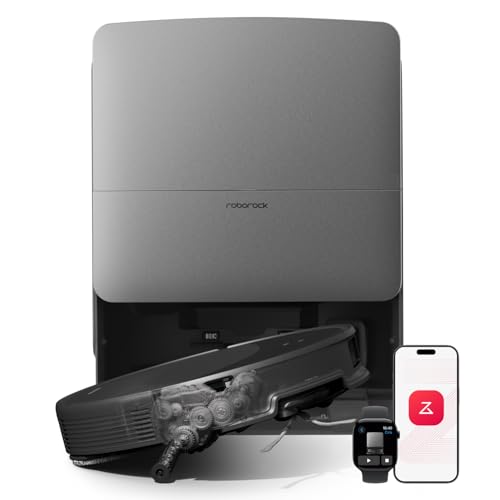
roborock Saros 10 Robot Vacuum and Mop, 22,000Pa Suction, AI Obstacle Avoidance, 3.14-inch Ultra Thin, Intelligent Dirt Detection, Zero Tangling Main Brush, Hot Water Mop & Dock Self Cleaning

Design and Build Quality
At first glance, the Roborock Saros 20 and Saros 10 look remarkably similar. Both measure approximately 8 centimeters in height, giving them a slim profile that allows them to clean underneath many types of furniture.
However, one of the biggest differences between the two models is their ability to cross thresholds. The Saros 20 features Roborock’s AdaptiLift chassis, which allows it to overcome thresholds of up to 9 centimeters. In comparison, the Saros 10 can handle thresholds of up to 4 centimeters. This gives the newer model a considerable advantage in homes with raised floor transitions, door tracks, or other obstacles between rooms.
Both robots use Roborock’s DuoDivide main brush, which is designed to prevent hair from wrapping around the roller. This is particularly useful for households with pets or people with long hair, as it reduces the amount of maintenance required. They also feature extendable side brushes for better corner cleaning, although the Saros 20 uses the more advanced FlexiArm Arc system.
Their mopping systems are another area where the two models differ. The Saros 20 uses dual spinning mop pads, while the Saros 10 features Roborock’s VibraRise 4.0 system. Both support automatic mop removal and extendable edge mopping, making them versatile options for homes with different floor types.
Vacuuming Performance: Saros 20 vs. Saros 10
One of the most noticeable differences between these two robot vacuums is their advertised suction power. The Saros 20 is rated at an impressive 36,000 Pa, compared with 22,000 Pa on the Saros 10. On paper, this gives the newer model a substantial advantage. However, advertised suction power doesn’t always translate directly into better real-world cleaning performance.
Our testing revealed that the difference between the two models was actually quite small in several areas. In our carpet airflow measurements, the Saros 20 recorded 454 FPM, while the Saros 10 achieved 445 FPM. Both robots also scored 100% in our carpet coffee pickup test, demonstrating excellent performance.
The results were slightly different when testing sand and cat litter. The Saros 10 actually performed better in our sand pickup test, scoring 60 compared with 55 for the Saros 20. However, the Saros 20 came out ahead in the cat litter test, scoring 100 compared with 98.
| Cleaning Test | Saros 20 | Saros 10 |
|---|---|---|
| Carpet airflow | 454 FPM | 445 FPM |
| Coffee pickup | 100% | 100% |
| Sand pickup | 55 | 60 |
| Cat litter pickup | 100 | 98 |
| Cleaning speed | 12 sq. ft./min | 11 sq. ft./min |
The Saros 20 was also slightly faster, cleaning approximately 12 square feet per minute compared with 11 square feet per minute for the Saros 10. Overall, both robots delivered excellent vacuuming performance. Despite the considerable difference in advertised suction power, the real-world results were much closer than you might expect.
Both models also feature automatic dust emptying, allowing them to empty their onboard dustbins into the docking station without requiring constant manual intervention. Noise levels were similarly close during our testing, with the Saros 20 measuring 72 dB and the Saros 10 measuring 74 dB in maximum suction mode.
Another advantage shared by both models is the DuoDivide main brush. Its ability to minimize hair tangling makes either robot a particularly appealing option for pet owners and households where hair buildup is a common problem.
Mopping Performance and Docking Station Features
Mopping is another area where the Saros 20 and Saros 10 take slightly different approaches. The Saros 20 uses dual spinning mop pads, while the Saros 10 relies on the VibraRise 4.0 system. Both robots can automatically remove and reinstall their mop modules, which is particularly convenient for homes with a combination of carpet and hard flooring. They also feature extendable mopping systems designed to reach closer to walls and furniture edges.
One important difference is their mop lifting capability. The Saros 20 can lift its mop by approximately 15 millimeters, compared with around 8 millimeters on the Saros 10. This gives the newer model additional clearance when transitioning between hard floors and carpets.
Both robots are also equipped with highly automated docking stations that handle much of the routine maintenance. They can automatically wash their mops, refill their water tanks, dispense detergent, detect how dirty their mop pads are, and clean their own docking stations. Both also support optional plumbing connections for automatic water supply and drainage, further reducing the amount of manual maintenance required.
However, the Saros 20 has an advantage when it comes to mop washing temperature. It uses water heated to approximately 100°C, compared with around 80°C on the Saros 10. Interestingly, the Saros 10 uses a slightly higher drying temperature of approximately 60°C, while the Saros 20 dries its mop pads at around 55°C.
Overall, both docking stations offer an impressive level of automation. However, the Saros 20 pushes things a little further with its hotter mop washing system and greater mop lifting capability. For anyone looking for a robot vacuum that can handle as much of its own maintenance as possible, both models are excellent choices.
Navigation and Obstacle Avoidance
Navigation is one of the most important factors to consider when choosing a robot vacuum, especially if your home has complicated layouts, furniture, cables, or other obstacles.
The Saros 20 features Roborock’s StarSight Autonomous System 2.0, while the Saros 10 uses RetractSense LiDAR with Reactive AI 3.0. Interestingly, the Saros 10 has a unique advantage here: its LiDAR sensor can retract into the robot, allowing it to navigate underneath particularly low furniture where a traditional raised navigation module might struggle.
The Saros 20 takes a different approach with its newer navigation hardware. Both robots also feature VertiBeam lateral obstacle avoidance, which helps them recognize and navigate around objects along their sides.
In our obstacle avoidance testing, the Saros 20 performed considerably better, achieving approximately 71% compared with 46% for the Saros 10. That’s a significant difference in favor of the newer model. However, neither robot performed particularly impressively when dealing with obstacles on carpet, so there is still room for improvement.
Both models also include video monitoring capabilities, allowing users to check in on their homes remotely. However, neither provides the option to directly take photos or videos while using the monitoring mode.
Battery Life and Cleaning Coverage
Interestingly, battery life is one area where the Saros 10 actually comes out ahead. Both robots use a 6,400 mAh battery, but their rated operating times and maximum cleaning coverage are slightly different.
| Specification | Saros 20 | Saros 10 |
|---|---|---|
| Battery capacity | 6,400 mAh | 6,400 mAh |
| Runtime in Quiet mode | 200 minutes | 220 minutes |
| Maximum cleaning coverage | 224 m² | 240 m² |
The Saros 10 offers approximately 20 minutes of additional runtime and a larger rated maximum cleaning area. This could make it an interesting option for users with larger homes who prioritize longer cleaning sessions and battery efficiency.
App Experience and Smart Features
Both the Saros 20 and Saros 10 use Roborock’s established app ecosystem, offering a wide range of cleaning controls, customization options, and smart-home integrations. In the app data we reviewed, both models received a rating of 4.75 stars, suggesting similarly positive user feedback.
One difference is their SmartPlan technology. The Saros 20 comes with SmartPlan 3.0, while the Saros 10 uses SmartPlan 2.0. This gives the newer model access to Roborock’s latest software generation, although both robots remain well equipped in terms of connected features.
Both support Roborock’s built-in Hello Rocky voice assistant, Matter smart-home connectivity, and third-party voice control through platforms such as Amazon Alexa and Google Assistant. They also include features like video calling and remote cruising, giving users additional ways to interact with and monitor their robots.
Overall, both models offer an impressive software experience. While the Saros 20 benefits from the newer SmartPlan system, the Saros 10 still provides a comprehensive selection of smart features that should satisfy most users.
Customer Reviews and Owner Feedback
Looking at customer feedback, owners generally praise both the Saros 20 and Saros 10 for their cleaning performance, mapping capabilities, and overall convenience. Many appreciate how effectively these robots handle everyday cleaning while minimizing the amount of manual work required.
However, feedback isn’t entirely positive. Some owners have reported reliability issues, unexpected malfunctions, or problems with their robots getting stuck or becoming entangled with objects. Other owners report having no significant problems at all.
Price is another point of disagreement. Some customers believe the advanced features and convenience justify the premium price, while others feel the overall cost is difficult to justify.
As with any high-end robot vacuum, it’s worth considering both the features and experiences of existing owners before making a purchase. Reliability, after-sales support, and warranty coverage are also important factors to keep in mind when investing in a premium cleaning appliance.
Roborock Saros 20 vs. Saros 10: Which One Should You Buy?
After comparing their designs, cleaning performance, mopping systems, navigation, and smart features, it’s clear that the Roborock Saros 20 is the more advanced robot vacuum overall.
It offers several meaningful improvements over the Saros 10, including higher advertised suction power, better obstacle avoidance in our testing, dramatically improved threshold climbing, hotter mop washing, greater mop lifting capability, and newer navigation and software systems. Its AdaptiLift chassis is particularly useful for homes with challenging floor transitions, while its improved obstacle avoidance makes it the more capable option in environments with scattered objects.
However, the Saros 10 is far from being an inferior cleaning machine. It still delivers excellent vacuuming performance and even outperformed the Saros 20 in our sand pickup test. It also offers longer battery life, greater rated cleaning coverage, and retractable LiDAR that can be useful when navigating underneath particularly low furniture.
If you want the latest robot vacuum technology and are willing to pay a premium for it, the Saros 20 is the better choice. Its additional capabilities make it a more versatile and advanced machine, particularly for homes with higher thresholds and more complicated layouts.
On the other hand, if you can find the Saros 10 at a significantly lower price, it remains a very compelling option. Its cleaning performance is already excellent, and many of the newer model’s advantages may not make a substantial difference in every household.
Final Verdict: Is the Saros 20 Worth the Upgrade?
The Roborock Saros 20 is the better robot vacuum overall, offering more advanced technology, improved obstacle avoidance, significantly better threshold climbing, and a more sophisticated mopping system.
However, the Saros 10 remains an extremely capable flagship robot vacuum in its own right. Our testing showed that the cleaning performance gap between the two models isn’t as large as their advertised specifications might suggest. In fact, the Saros 10 even managed to outperform the Saros 20 in our sand pickup test.
Ultimately, the decision comes down to price and which features matter most to you. If you want the most advanced system available between these two models and are willing to pay for it, the Saros 20 is the clear winner. But if the Saros 10 is available at a significantly lower price, it could potentially offer better overall value.
The key takeaway is that you’re not choosing between a good robot vacuum and a bad one. You’re choosing between two highly capable flagship machines, with the Saros 20 offering more advanced technology and the Saros 10 potentially delivering better value.
For more robot vacuum comparisons, hands-on reviews, and independent cleaning tests, stay tuned for our latest updates.
Roborock Saros 20 Robot Vacuum and Mop, 3.46 in Double-Layer Threshold, 36,000 Pa, 3.14 Ultra Slim, Zero-Tangling for Pet Hair, 212 F Hot Water Wash, AI Powered Smart Cleaning for Carpet, Black
roborock Saros 10 Robot Vacuum and Mop, 22,000Pa Suction, AI Obstacle Avoidance, 3.14-inch Ultra Thin, Intelligent Dirt Detection, Zero Tangling Main Brush, Hot Water Mop & Dock Self Cleaning
Leave feedback about this